All You Need To Know About Used Car Insurance

Buying a used car has its benefits. You can get a car within your budget and even test your driving skills with a used car. Moreover, if you are looking to own a premium or a luxury car and not want to invest a considerable amount of money in the same, you can own a used car.

When you buy a used car, you also have to get the car covered under a valid insurance policy. The Motor Vehicles Act, 1988 mandates a liability only used car insurance policy on the car before you take it out for a ride. So, let’s understand the policy in details –

What is a used car insurance plan?

A used car insurance policy is coverage that is allowed on used cars. The policy comes in two variants of third party liability only cover and comprehensive package cover. You can opt for any of these second handcar insurance plans when buying a used car.

Why should you opt for second-hand car insurance?

You need a used car insurance policy because of the following reasons –

  1. Legally mandatory 

    Third-party coverage is legally mandatory. So, you need at least a third party cover on the car before you drive it. If you are caught without a valid cover, you would suffer considerable fines and even imprisonment in severe cases.

  2. Comprehensive coverage 

    If you invest in a comprehensive old car insurance policy, you can get coverage for the damages suffered by your car. These damages might arise from natural or man-made calamities and can incur considerable repair costs. Under the comprehensive policy, however, the repair costs would be paid by the insurance company taking off a huge financial burden from your shoulders.

  3. Financial security 

    The third-party coverage provides financial protection against legal liabilities against third parties if your car causes them any harm. These liabilities can be considerable, especially in the case of the death of a third party. In the absence of a used car insurance policy, the liabilities can cause a financial strain on you.

  4. Security in case of thefts

    If your car is stolen, you would get a lump sum claim under the used car insurance policy. This would give you the financial means to replace the stolen car easily.

  5. Easy claim settlements

    You can enjoy cashless repairs at networked garages under comprehensive second hand car insurance plans. This allows you to get your car repaired without any financial hassles.

So, for fulfilling the legal mandate and to enjoy financial security, a used car insurance policy becomes a must.

Top used car insurance plans 2022

If you are planning to cover your pre-owned car, check the table given below to get a fair idea of the top car insurance plans for used cars 2022. 

Bike Insurance Company

Motor Incurred Claim Ratio (2020-21)

Network Garages

Premium Price*

Universal Sompo General Insurance Company Limited

87.96%

3500+ network garage

INR 5,310

IFFCO Tokio General Insurance

84.04%

4300+ network garages

INR 11,306

Reliance General Insurance

76.89%

6200+ network garages

INR 9,224

New India Two Wheeler Insurance

78.20%

216 network garages

INR 6,432

Bajaj Allianz General Insurance Company Limited

68.06%

Major garages are covered 

INR 7,633

*The Premium Prices mentioned above are of a Volkswagon Ameo Petrol (2017).

Transfer of car ownership and insurance

When buying a used car, there are two steps that you need to follow. The first is to transfer the ownership of the car from the previous owner to your name. The second is to transfer the insurance policy from the last owner’s name to your name. Here’s how you can go about both these steps –

  1. Transferring car ownership

    The first thing to do is to transfer the ownership of the car before you can apply for a transfer of insurance. The ownership of the car can be transferred through the following steps –

      • You would have to inform the RTO of the change in ownership so that the RC book of the car is duly updated with the new buyer’s details.
      • To inform the RTO and file for a change of ownership, you would have to fill up and submit three RTO forms. These forms are as follows –
        1. Form 28 is the form for the No Objection Certificate
        2. Form 29 is the form for transfer of ownership
        3. Form 30 which is an intimation for transfer of the car

    Both the seller and the buyer of the used car would have to sign these RTO forms before they are submitted to the RTO.

      • You would also have to pay a fee for the transfer of ownership in the RC book. This fee would depend on the RTO where the car is registered. 
      • Other documents would also be needed to complete the transfer of ownership. These documents should be attached with the RTO forms and submitted to the RTO. The documents are as follows;
        1. Registration certificate (RC Book)
        2. PUC certificate
        3. Tax certificate for the road tax paid on the car
        4. A declaration by the car owner stating that he/she intends to sell the car
        5. Copy of the insurance policy
        6. An affidavit stating the change in ownership of the car
        7. Address proof of the car buyer

    Once the documents are submitted and the application is made, the RTO would change the ownership and issue an updated RC Book for the car.

  2. Transfer of insurance

    Once the ownership is transferred, you can transfer the insurance policy from the seller’s name to the buyer’s name. Here’s the process –

    • The seller needs to inform the insurance company of the change in ownership of the car. This information should be given in writing.
    • If the seller has any No Claim Bonus (NCB) to his name, the insurance company would issue an NCB certificate to the seller before transferring the insurance policy
    • You would have to submit some documents to transfer the policy. These documents include the following –
      1. The updated RC book. If the RC book is in the process of being updated, you can also submit Form 29
      2. NOC from the seller
      3. Existing policy bond
      4. New proposal form for insurance
      5. Vehicle inspection report
      6. The difference premium payable

    Once the application is submitted along with the documents, the insurance policy would be transferred in the name of the new buyer.

Buying new car insurance for a used car

Rather than getting the ownership transferred in the existing policy, you can also opt for a new car insurance policy. To do so, you can buy the policy online or offline. For buying offline, you would have to get in touch with an insurance agent or a broker. Alternatively, you can visit the branch of an insurance company and apply for a new policy.

The online mode, on the other hand, is much easier. You can simply visit the website of an insurance company or an insurance aggregator and buy a new used car insurance policy. Provide the details of the car and the premium would be shown. Compare the premium and the coverage benefits and buy the best second hand car insurance policy.

Steps to buying new insurance for your second-hand car:

  1. On Turtlemint’s website go to “Get Car Insurance Quotes”, enter the car registration number
  2. Enter the required information such as city and RTO, make and model of the car, year of registration, etc. 
  3. Select Petrol, CNG, Diesel, and CNG External Kit as vehicle fuel type. 
  4. Enter personal information such as name, email, and phone number and check the premium amounts for the various plans. 
  5. Choose a plan that meets your coverage requirements and financial limits. 
  6. Choose the additional coverage through Add-Ons if you want and complete the payment of the final premium amount. 
  7. Used car insurance will be provided once payment is complete once the payment is processed.

Why choose Turtlemint for used car insurance?

Turtlemint is an online platform that allows you to buy an old car insurance policy online without hassles. The reasons why Turtlemint can be the best mode of buying a car insurance plan are as follows –

  1. You can buy the policy instantly online by following a simple process
  2. Turtlemint is tied up with the leading car insurance providers of India. You can, thus, get the best coverage benefits through Turtlemint’s portal.
  3. Turtelmint allows you to compare and choose the most suitable used car insurance policy which offers the most comprehensive coverage benefits at the lowest used car insurance prices
  4. At the time of claim, Turtlemint gives you complete assistance to get your claims settled quickly and easily.

So, visit https://turtlemint-stage.dreamhosters.com/car-insurance/ and buy the best used car insurance policy.

Things to check before buying a second-hand car

If you are thinking of buying a second-hand car for your needs, here are some things that you should check –

  • Check the usage of the car. Buy a car that has useful life left. Try and avoid very old cars as their maintenance costs would be high
  • Opt for a model that fits your budget
  • Do a thorough inspection of the car to find if it is damaged anywhere and to assess its present condition
  • Try and buy a second-hand car from reputed dealers, online or offline
  • Make sure the ownership is successfully transferred after buying the car

Do your research and select the best car. Don’t forget to add the used car insurance policy when you buy a second-hand car.

Frequently Asked Questions

  1. Within what duration should I get the insurance policy transferred after I buy a used car?

    The transfer of the insurance policy should be done within 14 days from the date of sale of the car. During this period, the third party cover would continue to apply. However, if the tenure of 14 days expires, the third-party coverage would cease.

  2. Where can I get the RTO forms for change in ownership?

    RTO forms can be downloaded online from the Parivahan website. The link is https://parivahan.gov.in/parivahan//en/content/download-forms. You can also get the forms at the RTO itself. 

  3. Can I opt for only third party cover on the second-hand car?

    Yes, you can opt for only third party cover which is mandatory. However, if you do so, any damages suffered by your car would not be covered. Moreover, if your car is stolen, you would incur a considerable loss. So, it is always better to opt for a comprehensive policy.

  4. Would the used car insurance policy cover all types of damages?

    A comprehensive used car insurance policy covers most types of damages. However, there is a list of policy exclusions that you should check. This list states the damages which are not covered by the policy.

  5. What add-ons are offered under comprehensive old car insurance plans?

    A range of add-ons is available under comprehensive old car insurance plans. Some common ones include zero depreciation cover (provided the car is not more than 5 years old), roadside assistance cover, engine protection cover, NCB protection cover, etc.


Buy Own Damage Insurance to Secure your Vehicle Against Damages

The Motor Vehicles Act, 1988 mandates every vehicle to carry third party coverage before it runs on the road. The third-party coverage provides coverage against third party liabilities that might incur if the vehicle damages third party property or causes injury or death to another individual. The third-party cover, however, does not cover the damages suffered by the vehicle itself.

If you want coverage for the damages on your own vehicle, you need to opt for your own damage insurance plan. This cover is meant for the damages suffered by the vehicle, i.e. if your vehicle suffers damages or theft due to natural or man-made causes. While own damage insurance is available under comprehensive vehicle insurance policies, you can also opt for the standalone OD policy. Let’s understand how.

Standalone OD policy meaning – what the plan is all about

A standalone own damage insurance plan covers only the damages suffered by the car. This policy does not include coverage for third party liabilities. This policy is issued for one year and can be bought only if you already have an independent third party liability policy. This means that the policy is not available unless a third party policy is already bought by the policyholder.

Benefits of own damage insurance

Here are the benefits of availing of an own damage cover –

  1. All-round coverage

    Since the own damage policy covers accidental and natural contingencies that might damage your car, it provides all-around coverage. Damages to your car involve considerable expenses on repairs. These expenses can cause a major financial strain. However, if you have your own damage insurance, the repair costs are shouldered by the insurance company allowing you financial relief.

  2. Coverage against theft

    Theft of the car causes a considerable financial loss. By covering such financial loss, own damage insurance gives you financial security and compensation to replace the lost car with a new one.

  3. Add-on benefits

    Under your own damage insurance, you can find optional add-on coverage benefits that help in enhancing the scope of coverage. Benefits like zero depreciation cover, no claim bonus cover, roadside assistance, etc. expand your coverage considerably thereby enhancing the claim pay-out.

  4. Attractive discounts

    There are attractive premium discounts under your own damage insurance. You can claim a discount of up to 50% by not making claims in your policy. Then, there are discounts for installing safety devices in the car, for opting for voluntary deductibles, for being a member of an Automobile Association, etc.

Who is eligible to buy their own damage insurance ?

An own damage cover can be taken by any individual who owns a vehicle. The cover can be bought through a comprehensive policy that also covers third-party liability. However, if you want only a standalone OD policy, you need to have third party coverage before opting for the plan. If you can furnish proof of a valid third party cover on your vehicle, you can opt for a standalone OD policy too.

Who should buy their own damage cover?

The own damage insurance cover is suitable for all vehicle owners because it provides a wider scope of coverage. The policy covers the damages suffered by the vehicle due to natural or man-made calamities. Moreover, if your vehicle is stolen, then also you get financial assistance from the insurance company for the financial loss suffered due to theft. Since the repair costs are considerable and a possible theft causes a considerable financial loss, the own damage cover is suitable for all.

If, however, you do not use your vehicle too much or if your vehicle is very old you can do away with your own damage cover. In that case, you can simply opt for a basic plan, i.e. a third party plan.

Inclusions in own damage insurance

The coverage extended under its own damage cover is quite extensive. The policy allows coverage against the following contingencies –

  1. Natural calamities like earthquake, storm, cyclone, flood, hurricane, landslide, subsidence, tempest, etc.
  2. Man-made calamities like fire, explosion, self-ignition, riots, strikes, malicious acts, etc.
  3. Theft of the car
  4. Damage to the car when it is being transported from one place to another via road, rail, air or water

Exclusions in own damage insurance

Despite the wide scope of coverage, the following contingencies are not covered under an own damage policy –

  • Deliberate damages
  • Damages suffered due to attempted suicide or self-inflicted injuries
  • Damages suffered when driving without a valid driving license
  • Damages suffered when driving under the influence of drugs, alcohol or other intoxicating substances
  • Damages suffered outside the Indian territorial boundaries
  • Consequential losses
  • Normal wear and tear or depreciation of the vehicle
  • Mechanical or electrical damages or breakdown of the car
  • Damages suffered when engaging in hazardous activities or in criminal acts

How to calculate your own damage premium?

The premium for an own damage insurance policy depends on a lot of factors. It also varies across insurance companies. So, to calculate the own damage premium, here are the factors that you must know about –

  1. Make, model and variant

    The make, model and variant of the car determines its market value. Depending on the market value, the coverage and the premium are determined. Premium cars have higher premiums compared to normal cars.

  2. IDV:

    IDV (Insured Declared Value) means the market value of the car after deducting depreciation based on the age of the car. IDV also represents the maximum coverage available under the own damage insurance policy. If the IDV is high, the premium would be higher and vice-versa.

  3. Registration details

    The registration date of the car reveals the age of the car based on which its value is depreciated. Thus, older cars have lower premiums and vice-versa. Similarly, the registration location also impacts the premium amount. Cars registered in metropolitan cities have higher premiums than cars registered in other places.

  4. Claim history

    If you have not made claims in the previous years, you are eligible for a no-claim discount. This discount reduces the renewal premium. Thus, depending on the claim history, the no claim bonus rate is determined which affects the premium rate.

  5. Renewal date

    If you opt for renewal within the due date, the premium would be low. However, if the policy has expired and then you renew it, the consequent premiums would be higher.

  6. Add-ons selected

    If you select the available add-ons, the premium would increase as each add-on comes with an additional premium amount.

  7. Discounts available 

    Besides the no claim bonus, if you are eligible for other discounts in the own damage cover, your premium would be reduced.

So, keep these points in mind to calculate the own damage premium when buying the policy.

Car insurance calculator 

While you are planning to purchase a car insurance policy, it is essential that you have an idea of the premium you will have to pay. Using a digital calculator, like the one offered by Turtlemint, you can easily check your insurance premium. By entering a few details, the premium for various plans could be calculated so you can compare the plans and make the decision accordingly. There are several factors that affect the calculation of your own damage insurance policy. These are:

  • Geographic area
  • Insured declared
  • Value of your vehicle
  • Displacement of the engine
  • Type age and make of the vehicle

Tips to reduce premium payable against own damage insurance

There are simple tips and tricks that can help you cut on the insurance premium. The premium payable against own damage insurance can be reduced by following the steps mentioned below:

  • Optional deductibles
    Optional deductibles are those amounts in own damage insurance, which you opt to pay at the time of claim settlement. Therefore, to reduce your own damage premium, you can opt to raise the optional deductible percentage.
  • No small claims

    To maximize the profits a policyholder should focus on no-claim bonus. To get this, the policyholder should have a claim-free year. This can be attained by not making claims for small repairs or minor damages.

  • Avoid insurance policy lapse
    Not renewing insurance policies on time might end up as higher premiums. Therefore, to avoid such instances renewal of policy is needed.
  • Transfer of no claim bonus
    If you were having a comprehensive motor insurance policy, then you should transfer the accumulated discount on the existing insurance policy.

Factors affecting own-damage car insurance premium

You must be aware of the various factors that affect the own-damage car insurance premium. These are:

  • Market value of car
    The existing market price of the car is one of the deciding factors in calculating the premium in the own-damage car insurance policy.
  • Displacement of your car
    Displacement in other words is also known as the cubic capacity of a car. It is directly proportional to the car’s speed. Therefore, the higher the cc, the higher will be the risk, this results in the own damage premium amount to be on a higher side.
  • Model of the car
    The car’s model also plays an important role while calculating the premium of the own-damage car insurance plan. If the car is on a costlier side, then the premium will automatically be on a higher side.
  • Age of the car
    Older cars tend to lose their value. So, the car’s age of the policyholder matters while calculating the premium. In simple words, the damage premium will be less, if the car is old.
  • No claim bonus
    If the policyholder has no claims in a year, then the no claim bonus percentage will help them to reduce their own damage premium amount. NCB can get you a premium discount up to 50%.
  • Opted add-ons
    The type of add-on chosen by the customer in their own damage policy directly affects the premium.

How to renew your own damage insurance policy?

Own damage insurance renewal can be done online or offline. Here’s how –

  1. Offline renewal

    For renewing offline, you need to either contact an insurance agent or visit the branch of your insurance company. You would have to pay the renewal premium and the policy would be renewed after the renewal request is processed by the insurance company.

  2. Online renewal

    For instant renewals, you can choose the online option. To renew online, visit the website of your insurance company, enter your policy number, pay the renewal premium and renew online. Alternatively, you can visit https://turtlemint-stage.dreamhosters.com/car-insurance/ and compare different plans to find the best policy. Then, you can buy the plan online and get your coverage renewed instantly.

Remember, if you renew the policy within the due date, your policy would be renewed easily. However, if the due date has passed and your policy has expired, you would have to arrange for an inspection of your car and after the inspection is successfully done, the insurance company would allow the renewal of the policy. 

What add-on cover can be bought with own-damage car insurance? 

Other than providing insurance for your car, there are several other add-ons that the own-damage car insurance policy offers. These add-on covers are designed in such a way that, after paying some extra amount apart from the standard premium, the coverage of the own damage insurance policy increases. Some add-on covers to include in your existing insurance plan are:

  1. Roadside assistance cover

    This is one of the most beneficial add-on covers that got your back anywhere anytime on the road. In case your car stops working in the middle of a road, you can call your insurance company and they will immediately reach out to you for the required help. 

  2. Zero depreciation cover

    When you file a claim, the depreciation value of your car and its parts are reduced from the claim bringing down the claim amount. However, if you have a zero depreciation cover, the cost of bearing depreciation will be incurred by the insurance company. Hence, if you have this add-on, when you file a claim, the depreciation cost will not be deducted. 

  3. Daily allowance cover

    One of the setbacks of your car repair is you have to find another means of communication and pay those extra bucks every day. However, if you have daily allowance cover, this might not be your problem. Until you receive your car back from the garage, the insurance company will provide you with the daily cost of communication. You can book a cab of your choice as well. 

  4. Key protect cover

    Keys are very prone to get lost. It may slip from your pocket or you may forget it somewhere. If you have a key protector cover, your insurance company will pay you the cost of replacing new keys. 

  5. Consumables cover

    For a car, the lubricants are the consumables. There are different consumables like oil, brake oil, engine oil, AC gas, steering oil, coolant, etc. When you purchase a consumable cover for your car, the insurance company helps you pay the cost of the consumables. 

The story does not end with purchasing a car. Deciding and purchasing the right kind of insurance policy and the add-on cover is equally essential. You must explore all the available options for your four-wheeler and then purchase what all seems beneficial. When you plan to purchase an add-on, make sure you need it. Also, by following some basic rules, you can easily reduce the premium. Make sure you renew your premium before it expires in order to stay updated and receive bonuses and discounts on renewal.

How to claim car insurance for your own damage in India?

If you incur a claim in your own damage insurance policy, you can initiate the claim process. The steps are as follows –

  1. Inform the insurance company immediately after you suffer a claim. This helps in registering the claim for the process to start.
  2. Once registered, the insurance company would also direct you to the nearest preferred workshop wherein you can get cashless claims
  3. Take your car to the workshop and the insurer’s surveyor would go to the workshop to check the damages
  4. Then the surveyor would submit the survey report based on which the claim would be approved
  5. After the approval is given, the garage would be instructed to start the repair work of the vehicle and the bills would be handled directly by the insurer
  6. Once the repairs are completed, fill and submit the claim form with other relevant documents for settlement
  7. After the claim is settled, you can take delivery of your car
  8. In case of theft, report the same to the police and file an FIR. If the police is not able to trace the vehicle, they would then issue a certificate of non-traceability. You need to submit the certificate for an insurance claim. 
  9. If you get your car repaired at a non-preferred garage, i.e. a garage not tied up with the insurance company, you would have to bear the repair costs yourself. After repairs, fill and submit the claim form along with the relevant documents and the claim would be reimbursed

If, however, you have bought your own damage insurance policy from Turtlemint, you can call Turtlemint for claim assistance. Call the toll-free number 1800 266 0101 or drop in a mail at support@turtlemint.com and Turtlemint would help you with the claim settlement process.

The own damage insurance cover is a valuable cover for your car which provides all-around financial protection. So, opt for the cover and get complete financial security against unforeseen financial contingencies.

Frequently Asked Questions

  1. What documents are needed for your own damage insurance claim settlement?

    For settlement of your own damage claim, the following documents should be submitted along with the filled and signed claim form –

    • Copy of your identity proof
    • Copy of the driving license
    • Copy of the RC book of the car
    • Police FIR in case of theft
    • Policy bond or Insurance Certificate
    • Any other document required by the insurance company.
  2. How to buy your own damage insurance policies?

    You can buy the policy online or offline. For buying offline you can get in touch with an insurance agent or visit the insurance company’s office. The online mode of buying is easier as you can buy the policy online instantly. Just visit the insurer’s website, provide your car’s details, pay the premium and buy the plan. You can also buy a suitable own damage insurance policy through Turtlemint’s platform which allows you to compare between the available plans and then buy the most suitable policy. Just visit https://turtlemint-stage.dreamhosters.com/car-insurance/, provide your car’s details and then get to check the quotes of different plans. Select a plan based on the coverage offered and the premium rate, fill up an online proposal form, pay the premium and the policy would be issued instantly.

  3. Is the premium for own damage higher than that of third party plans?

    Yes, it is because own damage plans provide a wider scope of coverage than third party plans. Premiums are, therefore, higher to compensate for the wider risk undertaken by the insurance company.

  4. How many add-ons can I choose under my own damage cover?

    You can choose as many add-ons that you want. However, remember that each add-on would include an additional premium. Moreover, you should assess the suitability of every add-on before you add it to your own damage plan.

  5. Would I lose the no claim bonus if I do not renew my own damage insurance policy on time?

    If your car insurance policy expires, the accumulated no claim bonus is retained for up to 90 days post the expiry date. If you renew the policy within this period, you can retain the no claim bonus and use it to claim a premium discount on renewal. However, if you do not renew the policy within 90 days of lapse, the no claim bonus would also lapse and become zero.

Covishield or Covaxin: Which One Should You Take?

With the COVID-19 pandemic wreaking havoc in India, one of the most effective defence mechanisms is vaccination. Unless there is mass vaccination, the pandemic will continue to come in waves and create tremendous devastation. Thankfully, the third phase of the vaccination drive has been announced in India and everyone above the age of 18 years can now get vaccinated. There are primarily two vaccines being administered in India – Covishield and Covaxin. If you are wondering which one to choose, we have some helpful data for you. Take a look and then decide which one is better suited for you.

Covid Vaccines in India 

Currently, India has two vaccines. The first one is the AstraZeneca-Oxford vaccine, Covishield. It is being manufactured in India by the Serum Institute of India. The other one is the indigenous Covaxin, manufactured by Bharat Biotech. Both vaccines have a high success rate and are given across the country. Both the vaccines are administered intramuscularly. 

Properties of the vaccines

While you may not be able to choose between the two vaccines once you arrive for your jab appointment, you can choose the one you wish to go for when booking your appointment on the COWIN portal. The properties of the vaccines are as explained:

  1. Covaxin
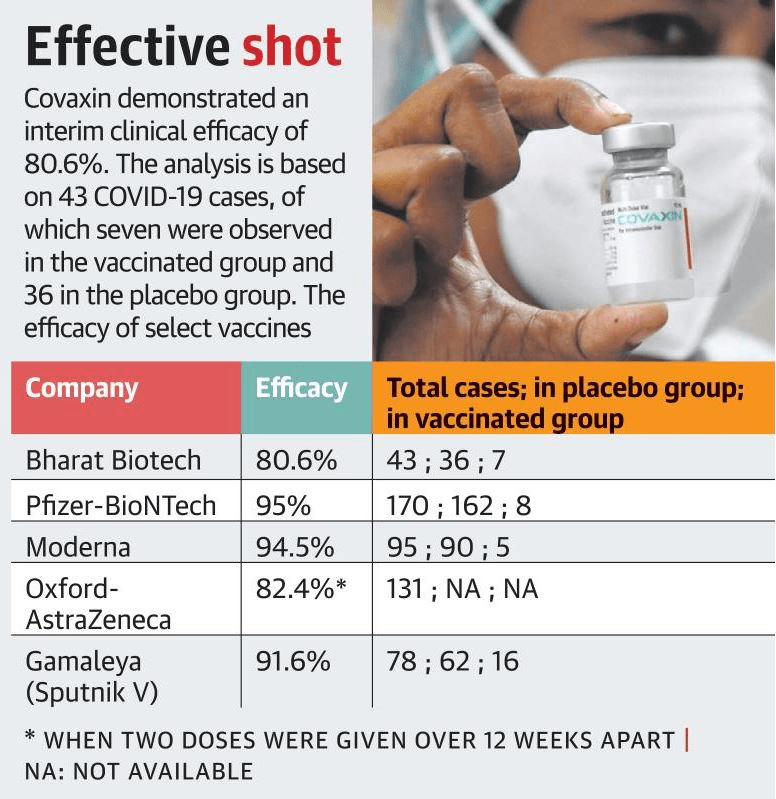
    According to the manufacturers, Covaxin implements the Whole-Virion Inactivated Vero Cell-derived technology. Here, an inactive virus is injected into the recipient’s body. While this virus is incapable of infecting the person, it is capable of training the immune system on how to fight an active virus, if it enters the body. Covaxin has an efficacy of over 78%, which is pretty impressive in a large country like India.
  2. Covishield
    The Covishield vaccine works on a different mechanism – the viral vector method. Here, an active, but harmless virus is injected into the body. It mimics the main illness and the body produces pathogens that keep the body prepared to fight the active, harmful COVID viruses in the future. It has an efficacy of around 82%.

vaccination

Source: The Hindu

The World Health Organisation states that any vaccine that has an efficacy of over 50% is a powerful measure to control a pandemic, and in this respect, both Covaxin, as well as Covishield, prove to be effective.

Dosage 

Both the Indian vaccines, Covishield as well as Covaxin, are given in double-doses. You can get the second dose of Covaxin after 28 of receiving the first dose. However, it is preferable to wait for 8-12 weeks between the two doses of Covishield.

Side effects

Mild to moderate side effects post-vaccination have been noted in recipients receiving both the COVID vaccines in India. These side-effects include fever, fatigue, soreness around the jab area, body ache and headache. The symptoms however are mild and subside within a day or two.

The WHO informs that experiencing a vaccine side-effect is normal and you should not panic if you notice these conditions after you get vaccinated. 

Production and manufacturers’ reputation

Currently, the vaccines are produced on a very large scale in India. Unfortunately, the numbers are still falling short, given the vast population of India. However, both Bharat BioTech and Serum Institute are working round the clock to ramp up the production. SII’s Adar Poonawala was recently quoted saying that SII received an order of 26 crore vaccine vials from the government. It has already delivered 15 crore vials and is working on producing the remaining 11 crore doses at the earliest. On the other hand, Bharat BioTech has received an order of 5 crore vaccine doses from the government. To fully vaccinate the entire population of the country, 60 crore doses would be needed.

The Serum Institute and Bharat BioTech are both highly reputed virology institutes in the country. They have successfully manufactured important vaccines in the past and this gives hope to the countrymen about the effectiveness of COVID vaccines too.

Table of comparison


COVAXIN

COVISHIELD

Developed by

Bharat Biotech ICMR

Serum Institute of India

Type

Whole-Virion Inactivated Vero Cell-derived technology

Viral-Vector Technology

Dose

2 doses, at a preferred interval of 4 weeks

2 doses, at a prefered interval of between 8 and 12 weeks.

Efficacy

78%

82%

Storage requirements

To be stored between 2 degrees and 8 degrees Celsius

To be stored between 2 degrees and 8 degrees Celsius

Administration 

Given on the left hand, intermuscular 

Given on the left hand, intermuscular 

Cost

Rs 150 for the Central Government, Rs 400 for State Government and Rs 1200 for a private hospital.

Rs 150 for the Central Government, Rs 300 for State Government and Rs 600 for a private hospital.

The takeaway 

Though launched with a lot of promise, the vaccination drive in India is struggling presently. There is a massive shortage of vaccines and getting an appointment is very difficult. It, therefore, is advisable for you to opt for the vaccine that is available at the earliest slot. Both the vaccines, Covisheild as well as Covaxin, have shown positive results, and since combating the pandemic is the main issue right now, getting vaccinated is the best option. 

FAQs about the vaccines in India

  1. Can I take one dose of Covaxin and another dose of Covishield? 

    No, you cannot take one dose of each vaccine. As stated, Covaxin and Covishield work on two different mechanisms, so you need to take the same vaccine on both occasions.

  2. How are the vaccines stored? Covaxin and Covishield? 

    Both Covaxin, as well as Covishield, need to be stored at temperatures between 2 degrees and 8 degrees celsius, which is equivalent to the temperature of a regular household fridge.

  3. Who shouldn’t take Covaxin/Covishield?

    While both the vaccines are very safe, you should speak to your doctor before taking it if you:

    • Are pregnant
    • A nursing mother
    • Have a severe allergic condition
  4. What is the price of each? 

    Covishield is charged at Rs 150 for the Central Government, Rs 300 for the State Government and Rs 600 for a private hospital while Covaxin is charged at Rs 150 for the Central Government, Rs 400 for the State Government and Rs 1200 for a private hospital.

  5. References:

Things to Know About Covid and Pregnancy

Being pregnant is one of the most important phases in a woman’s life. There are so many emotions that she goes through every minute of the day. There is happiness, there is nervousness, there is joy and there is doubt. Every pregnancy has its own set of challenges, heartburn, morning sickness, fatigue, anxiety and now a pandemic. So, here is all that one needs to know about Covid and Pregnancy. 

In these times, if someone is expecting, it is completely understandable that they might be worried about COVID-19. In India, the second wave is already creating havoc. With over 4 lakh cases being reported each day, the situation is scary. But there is no reason to panic, as complete care can be taken to avoid pregnancy-related complications!

Most women who are carrying may find it hard to distinguish if they have a fever or are running a little hot. Feeling flushed or experiencing hot flashes is said to be common among expecting mothers. In most cases, the reason for this is the hormonal changes going inside the body. Under such circumstances, it becomes all the more difficult for an expectant mom to understand whether she is under the weather or down with COVID-19. 

What are the Symptoms of COVID-19?

In confirmed COVID-19 cases, people generally experience the following symptoms:

  1. Fever 
  2. Shortness of Breath
  3. Cough
  4. Chills/ Shivering
  5. Muscle Pain
  6. Headache
  7. Loss of taste/ and smell
  8. Congestion/runny nose
  9. Diarrhoea
  10. Sore Throat
  11. Nausea/ Vomiting

In most cases, the symptoms can stay from 2 to 14 days. While some people experience mild illness, others may feel seriously unwell. There are also patients who are COVID positive but do not have any symptoms

What should someone do if she is pregnant and yet has Covid?

If you know of someone who has the above symptoms, it is recommended that she should monitor her body temperature and keep a tab of her overall health conditions keeping her gynaecologist in the loop. She should ideally isolate herself completely as best as possible and follow all guidelines of WHO. She should not take any medications without consulting her doctor.

Does COVID-19 cause a higher risk for Pregnant Women?

Women who are expecting, or women who have recently delivered or older women, overweight women and/or women who have had a medical history such as diabetes and hypertension may be at a higher risk of being Covid positive. As there are many respiratory and immunity changes in the body, pregnant women may get their lungs affected. In case a pregnant woman develops severe symptoms, she may require intensive care.

As per the Centres for Disease Control and Prevention (CDC), there are 7 types of coronavirus that are known to infect humans. Though many have a mild effect and cause a cold, some of the types can make one seriously ill. The CDC says the following about pregnancy and COVID-19: “Based on what we know at this time, pregnant people are at an increased risk for severe illness from COVID-19 compared to non-pregnant people. Additionally, pregnant people with COVID-19 might be at increased risk for other adverse outcomes, such as preterm birth.”

Does pregnancy increase the risk for developing Covid-19?

When a woman becomes pregnant, her immune system undergoes certain changes. It may so happen that she is at more risk for developing Covid-19.

What precautions can a pregnant lady take during the nine months of pregnancy in the pandemic?

Being a new virus, scientists are still learning about how this virus can affect pregnancy. In the meantime, it is best recommended that soon-to-be moms practise all safety norms issued by the government such as:

  1. Practise social distancing wherever possible
  2. Wash your hands frequently
  3. Stay at home as much as you can
  4. Wear a double face mask in public
  5. Monitor your health
  6. Avoid touching your face
  7. Avoid being near people who are unwell
  8. Follow all public Healthline guidelines
  9. Staying active and fit by following the prenatal instructions

The gynaecologist would be the best person to offer prenatal care while ensuring that she stays safe. Thus, keeping the gynaecologist updated about all health conditions through phone calls or virtual appointments is necessary. 

What to keep in mind when in the hospital for delivery?

The second wave of COVID has led to an acute resource shortage in hospitals. The Gynaecologist/ Obstetrician should be made aware of the birth plan. Normal delivery is different from a planned caesarean. Hence proper planning would be needed with the gynaecologist so that the other doctors, nurses and paediatricians are informed accordingly.

When at the hospital, these basic protocols would be followed, which needs to be adhered to 

  1. Doctors, nurses and staff would be following the Covid-19 protocols and wear protective gear at all times
  2. The visitors need to be restricted
  3. If the condition allows, she may be discharged early as well

What protocols need to be maintained after getting the newborn home?

The excitement of holding a newborn baby would be high, but the necessary precautions need to be taken as the immunity of the baby would be low at birth. Hence the risk of infection would be high. The hospital would have taken care of the basic precautions at birth, and hence the rest of the safety protocols need to be followed when the newborn child is brought home for the first time.

  1. The mother and child need to be quarantined for a minimum of 14 days without any visitor from outside. They would be most susceptible to secondary infections at this time.
  2. All visitors like grandparents, uncles, aunts, etc. need to be quarantined for at least 14 days before the child can be handed over to them.
  3. All outsiders can visit the child after the initial period of 14 days but with the mask on, provided they are not sick at that point in time.
  4. All functions and events can happen online for the time being till the pandemic settles.

There is no harm in taking an extra precaution so that the newborn child is not infected even with any secondary infections as any doctor or hospital visit can be precarious at this point in time.

Keeping in mind the second wave, should home birth be done?

In this fast-moving situation, most information becomes outdated very soon. Homebirth with the help of the gynaecologist may sound like a good idea, but it needs to be discussed and planned well with the doctor. There are pros and cons of both hospital birth as well as home birth but emergencies can be better handled at the hospital. So, it needs to be decided by the parents and the doctor in consultation.

How will a Covid positive mother take care of her newborn child?

A covid positive mother needs to keep the following protocols in mind as she would be sharing the room with a newborn whose immunity would be practically nil!

  1. Washing hands carefully with the soap for a period of a minimum of 20 seconds right before holding the baby or using a hand sanitiser that has at least 60% of alcohol content
  2. Wearing a double mask whenever the mother is within 6 feet of the baby
  3. Trying as best to stay away from the newborn baby by at least 6 feet
  4. Using physical barriers such as an incubator while the mother is infected
  5. Taking the help of a healthy caregiver/nurse who is not at risk for severe illness.

If the mother is infected, can she pass on the Covid-19 virus to the unborn child?

Say a silent prayer! COVID-19 is reportedly uncommon in a baby born to an infected mother, even if she were infected during the time she was carrying the baby. However, a newborn baby may test positive or negative soon after birth.

But it is still not known if these babies got the virus before, during or after being born. Most of these infected babies had mild or no symptoms at all and recovered completely. Only a few were reported with severe COVID-19 illness.

Can a covid-19 positive mother breastfeed the child?

So far, there is no study that can stop a mother from enjoying this feeling of connection with the baby. There is still no evidence that this virus can infect the breastmilk. Rather, breastmilk can help to protect the baby against many illnesses. 

But there is a word of caution! If a nursing mother has tested positive, she needs to follow these safety protocols:

  1. Washing hands before touching the baby
  2. Using a double face mask while feeding 
  3. She can also opt for `expressed milk` by following appropriate ‘breast pump’ sanitization techniques
  4. Maintain proper respiratory hygiene for both the mother and child
  5. A healthy caregiver or nurse, who is not tested positive, could bottle feed the expressed milk to the child
  6. Keeping all surfaces clean and properly sanitized

Does a newborn child need to wear a face mask?

A newborn child’s face should not be covered with a mask. As per WHO guidelines, children less than two years MUST NOT wear face masks.

Precaution:

A face mask/shield can pose a threat of Sudden Infant Death Syndrome (SIDS). It can cause accidental suffocation. Bodily movements of babies can cause the shield to block their air passage like nose or mouth. The strap of the shield can cause strangulation.

What signs to look out for infection in a newborn child?

Most babies who have been infected with the COVID-19 virus show mild or no symptoms at all. Severe illness in babies is rare, however, as coronavirus is a new virus, there aren’t too many studies to support it.

Babies with an underlying medical condition or babies who were born earlier than 37 weeks are more prone to severe illness from COVID-19. In case the baby shows symptoms or the baby has been exposed to this virus, then the paediatrician needs to be contacted at the earliest.

Conclusion

Everything that you do and everything that happens to you has an effect on you and the baby growing inside you. This consciousness can often make dealing with an illness all the more complicated, and the worry of bringing your baby into this virus-stricken world can be overwhelming.

The virus is new, a lot more research is required to understand its effects on expecting moms, new moms and their babies. There is very little data that can offer accurate guidance. Being pregnant in the pandemic has brought unique challenges, but not to worry much. Just take all the necessary precautions, surround the pregnant woman or the new mother with happy and positive thoughts, read good books and keep her happily engaged. Yes, the challenges would be there, but it would all be worth the effort! 

Ref:

What is the Official Line of Treatment for Covid Patients in India?

The way coronavirus has upended our lives, it is difficult to imagine if life would be normal again. The surge of this disastrous disease has been so massive, that it has made even the most developed nations’ healthcare come crumbling down. However, man continues to fight the pandemic with all his might. 

The challenges faced by the Indian government are many. The vast population, the lack of resources, the ignorance among people, the newness of the pandemic have been big hurdles in containing the adverse situation. In lieu of the emerging pieces of evidence, the government has been revising its treatment protocols from time to time.

Recently, new guidelines have been issued by the All India Institute of Medical Sciences (AIIMS), to treat Covid-19 among adults. The course of treatment has been classified into three categories, on the basis of the seriousness of the patient:

  1. Mild Case
  2. Moderate Case
  3. Severe Case

In this article, we will discuss the official line of treatment in all three categories.

Treatment for Mild Cases of Covid-19

The patient who has mild covid-19 has upper respiratory tract symptoms such as cough, sore throat, tiredness, with or without fever. There is no shortness of breath or hypoxia in these patients. Such patients are recommended home isolation and care. Let us take a look at the Dos and Don’ts for these patients.

Do’s

For a patient who is a mild case of Covid-19:

  1. Maintain a physical distance of 6 feet from all members at home, and pets
  2. Strict hand hygiene must be maintained
  3. Double/ N-95 mask must be worn at all times
  4. Be in regular contact with your doctor
  5. Keep a thermometer and oximeter to monitor your temperature and oxygen levels
  6. Follow the symptomatic treatment that includes antitussive, multivitamins, hydration, antipyretics, as recommended by your physician

Can Also Do:

  • Tab Ivermectin Dose 200 mcg/kg can be taken once a day for 3 days
  • Hydroxychloroquine Dose 400mg BD – for 1 day, which has to be followed by 200mg BD for 4 days
    These medicines should be taken only after consulting your physician
  • Metered-dose of Inhalational Budesonide can be given if fever or cough continues beyond 5 days, after consulting the doctor

Treatment for Moderate Cases of Covid-19

Confirmed cases of covid-19 who have a respiratory rate of more than 24 per minute have shortness of breath and their SpO2 is below 90% or are categorised as moderate cases of Covid-19. It is recommended that such patients are admitted to a hospital. 

Recommendations:
Oxygen Support

  • The targeted SpO2, i.e. the oxygen saturation is a minimum of 92% to about 96%. The higher the better. 
  • For COPD (Chronic Obstructive Pulmonary Disease) patients the oxygen saturation is considered normal for 88% to 92%
  • The preferred tool for oxygenation is a non-rebreathing face mask
  • Patients are to be encouraged to practise awake proning

Anti-inflammatory or Immunomodulatory Therapy

  • Injection Methylprednisolone to be given from 0.5 to 1 mg/kg in divided doses
  • If a patient is unstable, he/ she may be switched to oral route

Anticoagulation

  • Conventional dose prophylactic unfractionated heparin or Low Molecular Weight Heparin can be given if there is no risk of bleeding

Clinical Monitoring

  • Breathing, change in the requirement of oxygen, hemodynamic instability to be monitored
  • If in case the patient’s condition worsens, Serial CXR; HRCT chest may be done
  • CRP and D-dimer should be monitored every 48 to 72 hours 

Treatment for Severe Cases of Covid-19

The patients who show signs of a respiratory rate above 30 per minute, shortness of breath or a SpO2 that is less than 90% are regarded to be severe cases of Covid-19. It is recommended that such patients are admitted to the Intensive Care Unit (ICU) of a hospital.

Recommendations:

  • Respiratory Support
    • Depending on the availability, NIV (Face mask or helmet interface) should be used for patients who have an increasing requirement of oxygen or their breathing is low
    • If the patient cannot tolerate NIV, intubation can be carried out with high work breathing
    • Patients who have an increasing requirement of oxygen can also be given HFNC
    • For management of ventilator, conventional ARDSnet protocol should be used
  • Anti-inflammatory or Immunomodulatory Therapy
    • Injection of Methylprednisolone from 1 to 2mg/kg IV in divided doses, for 5 to 10 days
  • Anticoagulation
    • Intermediate dose prophylactic unfractionated heparin which should be weight-based
    • Heparin can be given if there is no risk of bleeding
  • Other Measures
    • Sepsis or septic shock should be managed according to the protocols and local antibiogram
    • Euvolemia should be maintained
  • Clinical Monitoring
    • In case the patient’s condition worsens, Serial CXR; HRCT chest may be done

Guidelines About Remdesivir

According to the recent guidelines issued by AIIMS, the use of Remdesivir should be done only in rare cases. The Emergency Use Authorisation, of the medicine, is on the basis of limited available evidence and only in specific circumstances”.

Remdesivir should be considered only for the following:

  1. Patients who fall under the category of Moderate to Severe cases
  2. Patients who do not have any renal or hepatic dysfunction
  3. Patients who experienced the initial Covid-19 symptoms less than 10 days ago
  4. Patients who are not on oxygen support or are in a home setting must NOT be given Remdesivir

Guidelines About Tocilizumab (Off-label) 

Tocilizumab (Off-label) should be given only when all the following criteria are fulfilled:

  1. The patient is severely ill
  2. There are significant inflammatory markers
  3. The patient’s condition does not improve even after steroids
  4. There is no fungal/ tubercular/ bacterial infection

Guidelines About Convalescent plasma (Off label)

Convalescent plasma (Off label) should be given when the following criteria are fulfilled:

  1. When the disease is within 7 days of the onset of symptoms
  2. There is high availability of high titre donor plasma 

Conclusion

With the health infrastructure on its knees, the government has been urging the public to stay at home, wear masks and maintain social distancing norms. The citizens need to empower themselves and prevent the further spreading of this deadly virus. While it is important that you stay updated about the covid-related information, it is also necessary to stay from negativity and rumours. Follow the government-issued guidelines and stay safe. 

References:

  1. https://www.mohfw.gov.in/pdf/RevisedNationalClinicalManagementGuidelineforCOVID1931032020.pdf
  2. https://www.indiatoday.in/coronavirus-outbreak/story/aiims-new-treatment-guidelines-for-covid19-1794038-2021-04-22

What Factors Affect your Bike Insurance IDV?

When you buy a comprehensive bike insurance policy, the coverage amount of the policy is called the Insured Declared Value (IDV). This value is calculated after deducting the depreciation of the bike from its market value. Depreciation of the bike is based on its age. The depreciation rate has been specified for calculation of IDV and it is as follows –

Age of your bike

Applicable depreciation rate

IDV (as a % of the bike’s market value) 

Up to 6 months

5%

95%

More than 6 months but below one year

15%

85%

More than a year but below 2 years

20%

80%

More than 2 years but below 3 years

30%

70%

More than 3 years but below 4 years

40%

60%

More than 4 years but below 5 years

50%

50%

For bikes that are aged more than 5 years, the IDV is calculated on a mutual agreement between you and the insurance company.

So, if the value of your bike is INR 80, 000 and you just drive it out of the showroom, the value, for insurance purposes would reduce by 5%!

Factors affecting the IDV

The IDV of your bike is affected by various factors. Let’s find out what these factors are –

  1. Age of the bike

    This is an obvious factor. As your bike ages, its depreciation increases and, so, the IDV goes down. If you check the table, you would see the IDV gradually reducing with the age of the bike. So, for older bikes the IDV is lower compared to newer ones.

  2. The make, model and variant

    Your bike’s make, model and variant (MMV) determines its market value. Different bikes are priced differently and so, when you buy bike insurance, the make and model of the bike is required to determine the IDV. Based on the MMV, the market value of the bike is determined and then the applicable depreciation is deducted to arrive at the IDV.

  3. Accessories added

    If you add accessories to your bike, which are not factory fitted, the value of such accessories would be included in IDV calculation. In such cases, IDV would be calculated using the following formula –

    IDV = (market value of the bike – age-based depreciation of the bike) + (market value of the accessories – depreciation on such accessories)

    So, if you add accessories to the bike and intimate the insurance company about the same, the IDV would be increased.

  4. Underwriting policies of the insurer

    Though there is a formula for calculating the IDV of the bike, you would find different insurance companies offering different IDV values when you compare bike insurance plans available in the market. This variation is because of the underwriting principles of the insurance company. Based on its underwriting policies, some insurers might offer you a higher IDV while others might restrict the coverage. You should, therefore, compare different bike insurance plans to find the IDVs offered by different insurance companies.

Choosing the IDV

Thankfully, you have the option to customize your bike’s IDV as per your requirement. You are allowed a maximum and minimum range of IDV and you can select the IDV within this range. You can also negotiate with the insurer to offer you the most optimal IDV in your bike insurance policy.

The IDV also determines the premium payable for the bike insurance plan. Higher the IDV, higher would be the premium that you would have to pay. That is why many individuals prefer a lower IDV so that their premium outgo is reduced. This, however, is a mistake. The IDV is the maximum claim liability that the insurer bears. If your bike is totalled or stolen, the IDV would be paid as claim under the bike insurance policy. In such cases, if your IDV is low, you would suffer a considerable financial loss. 

So, for saving a few bucks on the premium payment, don’t compromise with the IDV. Do your IDV calculation using the above-mentioned factors and find out the most optimal IDV for your bike. Then, look for policies that offer the IDV closest to the optimal level and choose them. If there is a contingency, the claim payment would compensate you for the loss that you suffer.

Do a little homework when you buy bike insurance, especially when it comes to the policy’s IDV. Choose a suitable IDV so that your bike is insured at its actual value.

How Top-up Health Insurance plans give you more Coverage at a Lesser Premium?

Medical costs have become unaffordable, to say the least. Medical inflation is rising steadily and quickly in India over the last few years. According to reports, the average retail healthcare inflation in the financial year 2017-18 was 4.39%. This increased to 7.14% in 2018-19 (Source: India Today). A considerable rise, don’t you think?

Against the increasing healthcare costs, you need an optimal coverage under your health insurance plan. A low sum insured means out-of-pocket expenses if a severe emergency strikes. Moreover, under family floater plans, an optimal coverage, i.e. at least INR 10 lakhs and above, is needed for sufficient coverage against expensive medical treatments. Can you afford a high sum insured in your health plan?

Though recommended, a high sum insured involves a considerable amount of premium. Paying such premiums every year might prove to be challenging and so, the relevance of a top-up health insurance plan comes into the picture.

What is top-up health insurance?

A top-up health insurance plan is an indemnity oriented health insurance policy. It comes with a deductible and a sum insured. If the claim exceeds the deductible limit, the excess claim is paid by the top-up health plan.

For example, say you buy a top-up health plan with a sum insured of INR 10 lakhs and a deductible limit of INR 3 lakhs. Claims up to INR 3 lakhs would not be paid by the plan. However, if you incur a claim of INR 4 lakhs, the top-up policy would pay INR 1 lakh as claim.

Benefits of top-up plans

Top-up plans are the best way to increase your health insurance coverage. Here are the reasons why:

  1. They have low premiums allowing you to increase your health insurance coverage without hurting your pockets. Top-up plans are, in fact, the most cost-effective way of enhancing your health insurance coverage 
  2. They provide a wide scope of coverage right from pre-hospitalisation expenses to post-hospitalisation costs, ambulance charges, day care treatments etc.
  3. You can buy top-up plans on family floater basis too to cover all your family members
  4. The premium paid for the policy qualifies for a deduction under Section 80D of the Income Tax Act, 1961 up to INR 25, 000. For senior citizens, the limit increases to INR 50, 000. You can claim an additional deduction of up to INR 50, 000 if you buy a plan for your parents too.

Types of top-up plans

Top-up plans come in two variants – top-up and super top-up plans. Both the plans are similar to one another except one fundamental difference. In top-up plans, each instance of claim is measured against the deductible limit. If any claim exceeds the deductible, the top-up plan is triggered. 

In a super top-up plan, however, aggregate claims made in one policy year are considered. If the aggregate of all claims exceed the deductible, the excess claim is paid.

Here’s a quick example to make things clear –

Suppose, you buy a top-up and a super top-up plans each with a sum insured of INR 10 lakhs and a deductible of INR 3 lakhs. You incur three claims in a year – INR 2 lakhs, INR 3 lakhs and INR 4 lakhs. Here’s how the top-up and super top-up plans would work –

Claim details 

Top-up plan

Sum insured – INR 10 lakhs

Deductible – INR 3 lakhs

Super top-up plan

Sum insured – INR 10 lakhs

Deductible – INR 3 lakhs

Claim 1 –INR 2 lakhs

Since claim is below the deductible limit no claim would be paid

Since claim is below the deductible limit no claim would be paid

Claim 2 – INR 3 lakhs

Since claim is equal to the deductible limit no claim would be paid

Aggregate value of claims = INR 2 lakhs + INR 3 lakhs = INR 5 lakhs

Since the aggregate value exceeds the deductible, claim of INR 2 lakhs would be paid 

Claim 3 – INR 4 lakhs

Claim of INR 1 lakh would be paid since it exceeds the deductible of INR 3 lakhs

Since the aggregate claims have already exceeded the deductible limit, the full claim of INR 4 lakhs would be paid

Super top-up plans are better than top-up plans as they consider the aggregate claim amount. As such, the probability of claim settlements is higher in super top-up plans.

Choosing the right super top-up plan

When buying a super top-up plan for enhancing your health insurance coverage, here are some tips to buy the right plan –

  1. Match the deductible of the super top-up plan to the existing coverage under your health plan. This way, claims up to the deductible would be paid by your existing policy and if you have excess claims, they would be settled by the super top-up plan.
  2. Check the coverage benefits offered by super top-up plans and choose a plan that offers a comprehensive scope of coverage
  3. Look for sub-limits under the coverage benefits offered by super top-up plans, especially the room rent limit. Try and opt for plans which do not impose sub-limits for better coverage
  4. Opt for family floater super top-up plans to provide coverage to every family member
  5. There are dozens of super top-up plans available in the market. Compare the plans of different insurers to find one that offers the best coverage at the lowest premium

Review your health insurance coverage today. Ensure that the coverage is optimal. If not, you can opt for super top-up health plans and enhance your coverage without having to part with considerable premiums.

3 standardized Insurance plans launched amidst the Pandemic

The Insurance Regulatory and Development Authority of India (IRDAI) takes various steps to ensure that insurance plans fulfil your requirements and prove relevant to your insurance needs. Given the difficulty of comparing insurance plans due to the different benefit structures, IRDAI introduced the concept of standardized insurance plans. Standardized insurance plans are those that offer a standard set of coverage benefits which is uniform across all insurance companies. There premiums, however, are determined by the insurance companies themselves.

The benefit of standardized insurance plans is to allow individuals to opt for a basic insurance coverage at affordable rates. Moreover, since the plans have uniform features, you can also compare the premiums across different insurers and buy the most affordable coverage.

Ever since the pandemic struck, IRDAI has introduced a range of standardized insurance policies. Three of the most popular policies are as follows –

  1. Aarogya Sanjeevani Policy 

    This is an annual health insurance policy that provides basic health insurance coverage at very affordable rates. The features of the policy are as follows-

    • It can be taken either on an individual or on a floater coverage basis
    • The sum insured is limited to INR 10 lakhs
    • Coverage is allowed for inpatient hospitalisation, pre and post hospitalisation, day care treatments, AYUSH treatments, modern surgeries, among others.
    • 5% cumulative bonus for every claim-free year up to a maximum of 50%
    • Pre-existing waiting period is 4 years

    Relevance

    The Aarogya Sanjeevani Policy is suitable if you are looking for affordable health insurance coverage. If you don’t have health insurance and want to start with a basic cover, this policy would be suitable. The policy would cover the common medical costs associated with hospitalisation. However, there are sub-limits under most coverage benefits and so you should check these sub-limits when buying the plan.

    How to buy?

    Many insurance companies offer the policy online through their websites while some companies offer only the offline mode. You can also buy the policy online through Turtlemint, to compare the premium charged by different insurers and then find the best rate.

    How to claim?

    If you are hospitalised and incur medical costs that are covered under the policy, you can make a claim. The policy is an indemnity based health plan which means that the policy covers the actual medical costs incurred. You can make a cashless claim at networked hospitals or reimbursement claims at non-networked hospitals.

  2. COVID-specific health insurance plans

    Given the rising incidence of hospitalisation following COVID, IRDAI introduced two standard COVID related plans – Corona Kavach and Corona Rakshak. The features of these plans are as follows –

    • Both plans cover only COVID related claims
    • Corona Kavach is an indemnity health plan that covers the actual medical costs incurred on hospitalisation due to COVID. Corona Rakshak, on the other hand, is a fixed-benefit plan that pays a lump sum benefit on hospitalisation due to COVID.
    • The sum insured of Kavach is up to INR 5 lakhs while for Rakshak it is limited to INR 2.5 lakhs
    • Kavach can be taken on a floater basis while Rakshak is available only on an individual basis
    • Both plans pay COVID related claims without any deductibles or limits
    • The tenure of coverage is 3.5 months, 6.5 months or 9.5 months.
    • The waiting period for COVID claims is 15 days

    Relevance

    If you are looking for a specific plan to cover possible COVID infections and the consequences, you can invest in these plans. Their premiums are low and they pay COVID-related claims without any deductibles and after a waiting period of only 15 days.

    However, remember that your normal indemnity health plan also covers COVID. So, do not substitute an indemnity plan with these plans. You can buy these plans in addition to an existing indemnity health policy.

    How to buy?

    Both these plans are available online as well as offline. You can buy them through the insurer’s website or an aggregator’s website after comparing the premium rates. 

    How to claim?

    Cashless claim facility is available under both the plans. For Corona Kavach you need to be hospitalised for at least 24 hours or more to make a claim. In case of Rakshak, however, hospitalisation of 72 hours or more is needed for an eligible claim. 

  3. Saral Jeevan Bima

    This is a standard term product that provides financial security. The plan offers a death benefit in the case of death during the policy tenure. Here’s a look at the plan’s features –

    • Flexible premium payment options are available. You can pay single premium, limited premium or regular premium
    • You can buy the plan in the age group of 18 to 65 years while coverage is allowed till 70 years of age.
    • The sum assured starts at INR 5 lakhs and there is no maximum limit
    • The plan does not pay any maturity benefit

    Relevance

    A term insurance plan is essential for financial security of your loved ones in your absence. Saral Jeevan Bima, therefore, provides financial security at affordable rates. If you are looking for a simple plan with pure risk protection, this can be a good choice.

    How to buy?

    Like the afore-mentioned health plans, Saral Jeevan Bima can also be bought online or offline. Buying through Turtlemint allows you to compare the premiums of different insurers. Since the plan’s features are same across insurers, comparison allows you to get the best rates.

    How to claim?

    If the insured dies, the nominee should inform the insurance company for getting claims. The claim form should be filled and submitted along with the death certificate of the insured and the identity proof of the nominee for claim settlement.

The bottom line

All these insurance plans are simple plans that offer the basic coverage at affordable premiums. They also allow you the benefit of premium comparison so that you get the best deal. So, assess your coverage needs and then invest in these plans for securing yourself financially.

Health Guide for Self-Care

COVID-19 has changed our life in the most drastic way possible. Navigation through this new normal is not always easy, whether it is isolating yourself, staying indoors, making children sit through the online classes, working from home with no household help, being away from loved ones etc. All this can take a toll on your health, both mental and physical. 

Every day we are dealing with new challenges. We are maintaining physical distance, washing our hands, staying indoors as much as possible, maintaining hygiene to keep ourselves and our loved ones safe against his pandemic. In such a scary scenario, it has been realised that self-care can make a great difference to our well-being.

What is Self-Care?

Self-care, according to the World Health Organisation, is “the behaviours you do to take care of your own health and can include hygiene, nutrition, leisure activities, sports, exercise, seeking professional healthcare services when needed, and much more.”

Self-care is not a luxury, it is an elementary part of this new normal life that we have been given. When the situation is out of our control, the best way to move forward is to accept the reality without dialling up stress levels. 

Self-Care In COVID Times

Over 1.63 crore Indians have received the coronavirus vaccine so far, and thankfully most recipients did not face any adverse effects. Soon, vaccination for people 18 years of age will also start. Here are some basic self-care tips that you can follow before and after your vaccination.

  • Build your Immunity

    Build your Immunity

    The first step to self-care is by building your immunity. And in order to build your immunity, you need to do a lot more than take your multivitamins.

    • Have a healthy Diet to Maintain a healthy Lifestyle

      Eat fresh, home cooked food that is full of proteins, green vegetables, fruits

    • Prefer foods that Build Immunity
      1. A piece of raw amla (gooseberry) in your mouth for an hour
      2. A spoonful of chawanprash
      3. Hot water, 3-5 glasses a day
      4. Turmeric tea
      5. Ayurvedic herbal tea
      6. Half a garlic clove
    • Vitamin Supplements

      Vitamin supplements can act as immunity boosters. They are available in forms of juices, tea, kadha, capsules, etc.

    • Exercises to build immunity

      Practise Pranayama, Yoga and meditation

    • Avoid Smoking, Alcoholic drinks

      As they tend to weaken the capacity of your lungs

    • A Positive Attitude

      A positive mindset is key to physical well being

    • Sleep for 7 to 8 hours

      An improved sleep recharges your mind and body

  • Staying Safe

    Staying Safe

    • Masking

      Having a mask on your face is not enough. Follow these mask etiquettes diligently:

      1. Wash your hands before touching the mask
      2. Cover your mouth and your nose
      3. Remove the mask holding the straps behind the ears

       Washing your hands

      Follow the simple 6-step process of washing your hands so that it is clean and free of virus.

    • Social Distancing Norms
      1. Wearing a mask in public is mandatory
      2. Try to maintain a distance of 6 feet between people
      3. If someone in the family is infected, wear masks at home too
      4. Avoid crowds
      5. Avoids spaces that are poorly ventilated
      6. Cover coughs and sneezes
  • Do’s and Don’ts of Social Hygiene

    Do’s and Don’ts of Social Hygiene

    Keep yourself well those around you safe. Follow these simple Rules:

    • Wash your hand regularly. Clean them with a sanitizer
    • While sneezing/ coughing use a handkerchief
    • If feeling unwell do not delay speaking to your doctor
    • Avoid meeting others if you are not feeling well
    • Spit in public

  • Respiratory Hygiene:

    Respiratory Hygiene
    Cover your mouth and nose keeping your elbow bent or with a tissue when you sneeze or cough. Dispose off the tissue immediately. Breathing exercises can greatly help in maintaining your oxygen levels. You can practise then in various positions:

    • Sitting cross-legged on the floor
    • Sitting in a chair
    • Sitting cross-legged on bed
  • Monitor your oxygen level:

    Monitor your oxygen level

    Normal level is between 94 – 100. If the oxygen drops below this, consult your doctor immediately. If you feel slightly breathless or your oxygen saturation is low, you could try self-proning. Try to spend 30 minutes on each:

    • Lay on your belly
    • Shift to your right side
    • Sit up with legs extended in front
    • Lay down on your left side
    • Lay down on your belly
  • Download the Aarogya Setu App

    Aarogya Setu App

    This mobile-base application ensures safety of the citizens from this disastrous disease. The app would highlight a hotspot or any high-risk areas. You can also check for symptoms associated with Covid in a few moments. To get started:

    • Download the app from PlayStore or AppStore
    • Allow location sharing and give access to bluetooth
    • Enter the OTP received on the mobile number
    • Fill in the required fields
    • Start the assessment test

Self Care Guidelines


Self Care Guidelines

  • Before Vaccination
    • If you are allergic to certain medicines, get an all-clear certificate from your doctor
    • Eat well and stay relaxed before the vaccination
    • Get a minimum of 6 -8 hours of sleep
    • Speak to your doctor if you are on regular medication
    • In case you are a diabetic or have BP issues, speak to your doctor before the vaccine
    • Cancer patients need to act only on their doctor’s advice
    • If you have been infected with Covid already, it is recommended that you avoid the vaccine for the next 2 months till you do an Antigen test and check with your doctor before taking the vaccine.
  • On the Day of Vaccination
    • Wear your mask, face shield and gloves 
    • Carry a sanitiser, keep using it
    • Wear loose clothes so that your upper arm is easily accessible
    • Stay hydrated, dehydration can cause fatigue and dizziness
    • Stay calm and have good, positive thoughts in mind
  • After Vaccination
    • Keep monitoring yourself for any side effects
    • Contact your doctor in case of vomiting, itching, fainting
    • It is better that you avoid alcohol the day you get your shot
    • Take your regular medication after consulting your doctor
    • Mark the Calendar for your Second dose

Self Care if You Get Infected With Covid


Self Care if You Get Infected With Covid

  • Symptoms: The common symptoms of Covid are
    1. Fever
    2. Dry Cough
    3. Tiredness
    4. Loss of smell or taste
    5. Sore Throat
    6. Headache
    7. Chills
    8. Nasal Congestion

    In case you think you have got infected with Covid, the first important thing is that you do not panic. Call your doctor or the Covid-10 helpline to find out where and when to get a Covid test. 

  • Severe Symptoms of Covid include
    1. Shortness of Breath
    2. Persistent chest pain or a feeling of pressure on the chest
    3. High fever
  • Quarantine Self-Care at Home

    If you do not have any severe symptoms, it is quite likely that your doctor would advise you to stay at home for 14 days. You would be asked to isolate yourself. Stay away from others and keep a check on your health. Follow the guidelines given below:

    1. Take a lot of rest
    2. Stay hydrated, drink lots of fluids such as 
    3. Water, nimbu-pani, fresh fruit juice, coconut water
    4. Use a “Steam Inhaler” to get relief from congestion 
    5. Drink warm/ hot drinks to get relief from sore throat
    6. Avoid spicy/ fried food. Eat healthy
    7. Keep washing your hands every hour or so, for 20 seconds at least
    8. Make use of a sanitizer at regular intervals
    9. After consulting your doctor, take Paracetamol and/or Ibuprofen to reduce fever and body aches
  • Stay Away from Others

    If you are infected and are at home, follow these guidelines:

    1. Stay isolated in a room, away from all members and pets
    2. Wear a double face mask if you have to use a common room
    3. You must not share dishes, clothes, towels, bedsheets and utensils with other members
    4. After use, make sure you sanitise and clean hardware and surfaces
  • Stay Home Till the Time
    1. You haven’t had a fever for the past 72 hours/ 3 consecutive days at least
    2. You no longer show any common symptoms
    3. It has been a week since you showed your initial symptoms

Self Care Essentials During Covid


Self Care Essentials During Covid

Keeping an emergency home kit is extremely essential these days. Keep these items handy to keep yourself and your family members safe.

  1. A thermometer
  2. Oximeter, if possible (normal SpO2 levels are 94-100)
  3. Over the counter medicines such as 
    1. Paracetamol, 
    2. Cough Syrup, 
    3. Nasal Spray
    4. Vitamin B complex, C and D3
    5. Betadine gargle
    6. Karvol vapour
    7. Steam inhaler
    8. Hand gloves
  4. Make sure you have enough soap, sanitiser and detergent
  5. Keep disinfectant wipes at home
  6. Keep disposable/ washable masks and gloves marked for each member to avoid mixing
  7. Keep a first-aid kit with bandages, pain killer, anti-allergy medicines 
  8. Avoid having overly spicy food 
  9. Prefer warm drinks
  10. Keep a list of emergency numbers ready, that includes details of:
    1. Your Doctor
    2. Nearest Hospital
    3. Ambulance Service
    4. Family Members (In case you have young children at home)
    5. Write down important passwords
  11. In advance, keep one room allotted as the isolation room. Keep sheets, towels, toiletries dishes here, for anyone who is ill
  12. Loose clothes and hand towel
  13. Arogya Setu App

Self Care – Being In Isolation and Dealing With It


Self Care – Being In Isolation and Dealing With It

One of the major reasons that can cause anxiety and stress is staying in isolation. Being alone during such trying times can indeed destabilise your positivity. That is why self-care is so important. It includes all the practices that relate to your mood and thus, your mental and physical health. 

So how can one strike a balance, how can one cope with being in isolation? Here are some ideas that can occupy you when you are struggling:

  1. Sleep. It is one of the few things that always work
  2. Meditation and yoga would help you keep your sanity in place
  3. Start writing a journal or poetry. Years later when you read it you’ll be all smiles
  4. Pursue that hobby that you always wanted to, read a book, start to paint, take an online music class
  5. Call old friends and your relatives with the extra time at hand. Chatting and having zoom calls might be fun
  6. YouTube is filled with tutorials. You can learn a new skill or concept by going through the Tutorials of Turtlemint on YouTube
  7. Catch up on the shows or movies that you had missed earlier

Self Care During Work From Home 


Self Care During Work From Home

Remember the time when you had to wake up early, commute for an hour to give a presentation in the office. How you wished you could do it from home. How you wished you didn’t have to travel so much every day to reach the office. Well, the prayers have been answered, though in a very mysterious way. 

Work From Home is something that we couldn’t have comprehended in pre-Covid times, but it is now a reality we live with. It is probably a feasible solution that most companies and organisations could think of. If COVID-19 has forced you to become a Remote Worker or a Worker From Home, follow these tips to keep yourself motivated, cheerful and healthy. 

  1. Exercise

    Being regular in your workout has multiple benefits. Now that home is the office, you ought to be out of excuses. Walking around the house, aerobics or a cardio workout. Do anything, but do something

    • Use your commute time to work out
    • Steal a few minutes from between the meetings
    • If you can, Sweat it out with Workout Sessions, there are plenty on YouTube
    • Choose exercises that you can do while sitting:
      1. Body Fold
      2. Stretch
      3. Side Stretch

  2. Sleep Schedule

    When the lockdown first happened, most of us utilised the extra time by sleeping. And though it felt great in the beginning, over-sleeping tends to make you lethargic. Bedtime and wake time are one of the most important aspects of self-care. Avoid the temptation to take a long nap in the afternoon, and then binge-watch movies till late at night.

    Even when you don’t have a con-call in the morning, stick to your schedule. If you are free, go out to the balcony for a while, walk the dog, water the plants.

    • Set alarms for wake time as well as bedtime
    • Exercise
    • Put your phone away at least 30 minutes before sleep time
  3. Mind Your Eating Habits

    For many people, the working from home routine has been a major reason for not just overeating but unhealthy eating as well. Many of us enjoy munching on snacks while on a conference call. But keeping your nutrition in check is a very important aspect of self-care. Mindless eating will not wreak havoc on the waistline but can greatly sabotage your health.

    • Avoid working in/ around the kitchen
    • Plan your meals ahead, save yourself from snacking
    • Missing meals will make you eat at the wrong time
    • Prefer balanced and healthy food
    • Keep yourself hydrated
    • When you have a craving, drink water
    • Stay away from sugary foods and drinks
    • Don’t bring junk food home
    • Avoid eating with a screen, you would end up eating more
    • If you feel like munching, don’t eat from the bag. Portion it out before eating
  4. Stay Clean and Dress “Up” for Work

    You need to have a formal work schedule for working from home. Taking a shower and dressing “up” for work instead of working in your pyjamas would give you a sense of having a proper work schedule. You need to be in formal attire every day but at the same time don’t consider WFH an all-day pyjama fest. This simple act of being office-ready gives you a feel-good factor and is thus an important element of self-care.

    Prepare your brain that you are not on a holiday, you are not sick, you are simply Working from Home.

  5. Make Full Use of the Commute Time

    Remember, the long list of things you thought of doing while cursing the nerve-wracking traffic jam. Well, now is your opportunity to do just that. Use this time in the best possible way.

    • Sip your morning tea out on the balcony
    • Do some yoga for a while
    • Start a book
    • Meditate – you can’t go outside, but you can surely go inside
    • Listen to music while you do your chores
    • Use this extra time to network. Speak to clients, potential clients, etc.
    • Devote this extra time to develop your pipeline projects
  6. Designate a Workstation

    For many of us, our laptop is our office. Of late, we have started carrying it to the bedroom, on the bean bag, to the terrace and even in the loo! It would be helpful in designating a place entirely as your work area, as it helps your brain in preparing for the work.
    Also, make sure you pick a comfortable chair when you work.

    • Avoid slouching
    • Sitting in the right posture improves attention, energy and attitude
    • Keep your work area tidy
  7. Avoid Overworking
    Not overworking and over-exerting yourself simply means knowing when to stop. You can be as efficient during work hours as you want, but knowing when to shut down the laptop is important. This again is about ‘routine’. Answering a few more emails, making one or two phone calls might seem a small job, but can often take up more time than you expected and make you burn out.
    • Start winding up work fifteen minutes before your work time is over
    • Unless urgent, avoid starting a new assignment in the last half hour of work
  8. Find Some ME-Time

    Self-care and me-time have certain similarities, but they aren’t really the same. Me-Time simply means, a few minutes with yourself, alone.

    • Early morning or late at night, take out some time for yourself
    • Do nothing, just sit and relax
    • If you want to, Think. If you don’t, just let your mind wander

This too Shall Pass

Apart from taking care of yourself for the vaccination, it is imperative that you stay motivated and healthy. The future may often seem bleak, but like always, this too shall pass. Your emotional wellbeing is very important, now more than ever. It is indeed a time of anxiety and tension. However, we need to focus our energy and thoughts on things that make us feel happy and uplifted. It is important that you indulge in self-care that helps you in dealing with negative emotions. 

Self-care is not really a new concept. Our parents, grandparents were stern believers in self-care. It is not uncommon to see many senior citizens wanting to try their own tricks and treatments and unwilling to see a doctor unless it is a serious matter. Self-care basically means maintaining good health and coping with illnesses without the help of a healthcare worker. With COVID-19 forcing us to stay locked in our homes, we are rediscovering and learning the art of self-help.