Top 5 Questions answered to ensure you get ‘Active’ on your Health Insurance NOW

The biggest reason for delaying your health insurance plan is procrastination! Most people keep “thinking” about the best health insurance without actually taking an action. Once the basic purpose of the health insurance plan is established, it’s much easier to choose the plan based on your needs.

So, here are the top 5 questions which you need to determine which would help you to opt for the best health insurance plan for yourself and your family.

  1. How much health insurance should you buy?

    Health insurance plans allow coverage from Rs.50,000 to Rs.2 crores or higher. As such, choosing the right coverage amount might stump many. Ideally, the choice of the sum insured should depend on your lifestyle, size of the family, estimated hospitalisation and treatment costs, age, etc. However, as a ready reckoner, there is a thumb rule for determining the optimal coverage amount. This thumb rule is as follows –

    Optimal coverage = 50% of your annual income + hospitalisation costs incurred over the past 3 years

    Many experts also recommend 50% of the income to be the starting point. So, if you earn Rs.20 lakhs a year, you need coverage of at least Rs.10 lakhs. Higher coverage is better as you can get sufficiently covered against rising medical costs.

  2. How to buy the policy?

    There are more than a dozen health insurance providers in India. As such, you might be spoilt for choice when it comes to finding the right plan and buying it. The ideal way to buy a health plan is to compare and then buy. There are leading online platforms that allow you to compare the health plans of leading companies. Assess your coverage needs and then compare the plans offering the desired coverage. Compare the coverage features vis-à-vis the premium and choose a suitable plan.

    As far as buying is concerned, the online mode allows you to buy the policy instantly, without hassles. So, you can easily compare on https://turtlemint-stage.dreamhosters.com/health-insurance/ and buy the policy online.

  3. Would the premium be affordable?

    Many individuals are concerned with the affordability of health insurance premiums. Truth be told, the premiums are affordable. You can also avail of different discounts that insurance companies offer and reduce the premium further.

    Furthermore, to make the premium even more affordable, insurers allow you the facility of instalment payments. You can pay the premium quarterly, monthly or half-yearly so that it becomes affordable in your pockets. So, avoiding a health plan by simply worrying about its affordability is no longer an excuse to skimp on health insurance coverage.

  4. What benefits to choose while opting for your health insurance plan?

    Health insurance plans can have a variety of benefits for you to choose from. This is the problem of abundance and you might get confused. Choose your plan according to your needs.

    For example, if you suffer from any illness before you buy the policy, such an illness would be called a pre-existing illness. The illness would usually be covered under the policy but after a waiting period. Health insurance companies usually impose a waiting period ranging from 12 months to 48 months after which your pre-existing illnesses get covered.

    So, if you suffer from any illness, you can opt for a plan with a low waiting period so that you can avail of the coverage quicker.

    Along with the regular hospitalisation benefits, here is a list of benefits that you can opt for:

    1. Must-Have benefits:
      1. Good coverage of pre-and post-hospitalisation expenses
      2. Maternity coverage for a young family
      3. Low waiting period for any pre-existing ailments
      4. Day-care coverage
      5. Annual health check-ups
      6. No copay, especially zonal
      7. Home care treatment or domiciliary cover
      8. AYUSH (Ayurvedic, Homeopathy, Unani, Siddha treatment coverage) benefit
    2. Good-to-have benefits:
      1. No room rent capping where there are no sub-limits for claim
      2. Restoration benefit, where the sum assured would be restored in case of claim
      3. Hospital cash benefit
      4. Critical illness benefit
  5. Would your claims be settled?

    Wondering if your health insurance claims would be settled or not? If you are, you can relax. Health insurers have simplified their claim processes so that you can get your claims settled quickly.

    You just have to follow some claim-related steps and your claims get settled easily. You can also seek expert help for claim settlement for a smoother experience. So, if you make a valid claim on your policy, your claim would be settled else the experts at Turtlemint would assist you with the same.

Once you have answers to these 5 questions, you will have an idea of which type of health insurance plan you need. Then all you need to do is opt for the plan at your earliest without contemplating further. In case you come across a better plan later, you can always choose to port it while continuing the benefits. Thus, it is wise to opt for a comprehensive plan so that your out-of-pocket expenses are minimised and you can avail all-round protection.

5 Best Add-on Car Insurance Covers in 2022

Comprehensive car insurance plans allow all-around protection for your beloved car. These plans cover the mandatory third-party liability and also give financial assistance if your car is damaged or stolen. To add icing to the cake, comprehensive car insurance plans also offer optional add-ons so that you can further widen the coverage as per your needs. Do you know about these add-ons?

What are add-on car insurance covers?

Add-on car insurance covers are optional coverage benefits that can be added to your base policy. There are different types of add-ons available in the market and each add-on offers a specific type of coverage. Add-ons cover different types of emergencies that you might face when using your car and enhance the claim amount. Each add-on comes at an additional premium and you can choose the add-ons depending on your coverage needs. 

Best add-ons for 2022

There are different types of add-ons available in the market for 360-degree protection in your car insurance plan. Among the available options, five of the best add-ons that you can opt for include the following –

  1. Zero depreciation add-on

    This is, by far, the most useful and relevant add-on that you can opt for in your car insurance policy. To understand this add-on, you need to understand the concept of depreciation. As you use your car, its parts suffer regular wear and tear which is not covered in your car insurance policy. As such, in the case of damage, the depreciated part of the car might get repaired or replaced. Since car insurance does not cover depreciation, the cost of depreciation is deducted from the repair or replacement cost of the part. This deduction depends on the type of part that is damaged. While the garage charges the full amount, the insurance company pays a fraction of the cost after deducting depreciation. The cost of depreciation, thus, becomes your out-of-pocket expense.

    This is where the zero depreciation add-on comes into the picture. If you choose this add-on, depreciation is considered to be nil. Thus, no depreciation is deducted by the insurer and you get the full amount charged by the garage for repairing the damaged part.

    Things to note 

    The zero depreciation add-on is usually available for cars up to 5 years old. If your car is older, you might not get the cover. Moreover, there might be a limit to the total number of zero depreciation claims that you might make in your policy. If the claims exceed the specified limit, the add-on would not apply for the exceeding claims.

  2. Roadside assistance add-on

    The roadside assistance add-on promises 24*7 assistance if your car breaks down in the middle of the road and you cannot tow it to the nearest garage. If you have the add-on you can simply call up the insurance company and the company would provide you with the necessary assistance so that you can complete your commute. 

    Under roadside assistance, add-on facilities such as tyre replacement, empty fuel tank, flat tyres, towing, etc. are offered.

    Things to note

    Under some car insurance plans, the roadside assistance cover might come as an inbuilt benefit. You should, thus, check whether the policy that you are considering allows an inbuilt coverage or an optional one.

  3. NCB protection add-on

    No claim bonus (NCB) is a benefit that you get if you don’t claim your car insurance policy. The bonus allows you to claim a discount at the time of renewals. Moreover, the bonus keeps on increasing after each successive claim-free year. However, a single claim wipes out the accumulated bonus and you lose the renewal discount. Not if you have the NCB protection add-on. The add-on keeps the NCB intact even if you claim your car insurance policy.

  4. Return to invoice add-on

    In the case of a total loss or theft of the car, the insurance company pays the Insured Declared Value (IDV) to settle the claim. The IDV is the depreciated value of the car depending on its age. It is lower than what you paid to buy the car. The return to invoice add-on, however, gives you the invoice value of the car if it is totalled or stolen. The add-on, thus, enhances the claim amount and helps you replace the car without any financial strain.

  5. Engine protection add-on

    Car insurance policies do not cover engine damages that might arise due to water seepage. To get coverage for such damages you need the engine protection add-on. The add-on covers engine damages caused due to water-logging and seepage.

    Things to note

    The engine protection add-on is highly recommended if you live in a flood-prone area or in an area where water logging is a major concern during monsoons.

These are some of the best add-ons that can give you more rounded protection in your car insurance policy. Keep these add-ons in mind when you buy or renew a car insurance plan in 2022 so that you can enjoy complete financial protection against car-related troubles.

Factors to be Considered by NRIs Before Buying a Life Insurance Policy in India:

Most Indians still consider traditional ways of investment to be the best and the one that tops most lists is life insurance. This is true even for people who are now NRIs. For them too, buying a life insurance policy is a smart move. So, if you are an NRI who is looking forward to purchasing life insurance plans in India, this might be the right time to do so. Here is a guide that tells you the various factors that NRIs must consider when buying a life insurance policy in India.

Explain the diff between NRI and PIO. Talk about an Indian citizen working abroad or a crew member on an Indian ship

NRI and Insurance:
Before we dig into insurance for NRIs let us quickly brush up on the meaning of NRI or Non-Resident Indians. An NRI can be defined as a citizen who:

  • Has resided in India for less than 182 days during the previous financial year
  • Stays out of India for employment purposes
  • Staying out of India for vacation or business purposes
  • Stays outside India for an uncertain period

It is important here to understand the difference between an NRI and a POI. POI or Persons of Indian Origin are those people who were born in India or have an Indian family. In addition to this, the people who live in other countries but are still Indian citizens and people who have Indian parents or grandparents also fall in the category of PIO. 

An insurance policy is a requirement of every individual which is why the laws of India allow an NRI as well to purchase a life insurance policy in India. The Foreign Exchange Management Act of India (FEMA), 1999 has made it possible for NRIs to get insurance policies in India. The insurance policies for NRIs are customizable, which helps them in addressing a number of financial needs. NRIs can take these policies and protect themselves and their families in times of financial crisis. 

If the NRIs are not present in India during the purchasing process, they will have to do all the medical examinations themselves and send reports to the company. In this case, the cost of medical examinations has to be borne by the NRI. On the other hand, if the NRI is in India during the purchasing process then the additional cost of a medical checkup has to be borne by the insurer. 

Life Insurance Policy for NRIs: Factors of Consideration

As some of the rules are different for NRIs when it comes to purchasing a life insurance policy, it is essential to check if you are eligible for the plan before you proceed further. The eligibility criteria include:

  1. The NRI must have possessed an Indian passport at some point of time in his life.
  2. The Indian Citizenship Act 1965, states that the NRIs parents or grandparents must have been a citizen of India.
  3. You must be married to an Indian citizen.

If you qualify these criteria, the next step is to look at some key factors that, as an NRI, you must not skip considering. These include:

  1. Cost of the Policy

    The cost of policy plays an important role and you must check and compare the cost of policy offered by various companies not only in India but in your residential country as well. It helps you in deciding the affordable cost and the one that suits you the most.

  2. Medical Test Cost

    Medical test is mandatory for every health insurance company. It helps them in deciding if or not an individual is capable of term insurance. For NRIs, it is not mandatory to be present in India to complete the medical test. They can either do it in their country and send the reports or visit India for the same. In India, the difference is that the expenses of tests will be carried by the insurance company.

  3. Payment of Premium

    NRIs are offered convenient modes of payment. The premium can be paid via:

    1. Non-Resident Ordinary (NRO) Account
    2. Non-Resident External (NRE) Account, or
    3. Foreign Currency Non-Repatriable (FCNR) Account

    It must be noted that if the payment of the policy is done through foreign currency, the premium payment needs to be done via NRE or FCNR account.

  4. Benefits

    Different life insurance policies offer different benefits. Some offer death and maturity benefits both and some offer only death benefits. The life insurance policy taken by the NRIs from the Indian insurance companies covers death, irrespective of your geographic location when you die.

    The benefit that is received depends on the kind of policy that has been opted for. The maturity/ death benefit amount of insurance is paid in rupees or in the currency of the country in which the NRI was currently residing. The insured individual/ the nominee needs to submit relevant documents when a claim has to be raised. It is suggested that you and your nominee are well aware of the expected benefits and the claim procedure. 

  • Tax Benefits
    NRI’s can avail of a tax benefit on the premium paid u/s 80C for the premium paid upto INR 1.5 lakhs a year provided he files a return in India. If there is any income in India, from interest, rental, etc. then he can avail of tax deduction u/s 80C against that. The death benefit and maturity benefit is tax-free u/s 10(10D) as per the Income Tax Act. an amount over the sum assured, for instance, bonuses, will be taxable. 
    • As an NRI, you also need to be mindful of FATCA, Foreign Account Tax Compliance Act, which helps the governments in combating money laundering and tax evasions.
    • If you are an NRIs, you can provide the valid Form 10F and Tax Residency Certificate (TRC), then there will be no deduction of Tax at Source (TDS).
    • It is recommended that NRIs take into consideration the tax rules and laws that are prevalent in their resident country before they buy an insurance policy in India.
  • Company’s Review
    Before you finalize a health insurance company, it is essential that you check the company’s reviews and its market reputation. Public reviews and CSR of the past few years will help you analyze if or not you would like to purchase a term policy from a particular company.

Conclusion 

Based on your budget you can explore insurance policies that can cover the best for your and your family’s needs. Pen down your requirements and finalize accordingly. You must explore all the available options so you can get the best one for yourself. 

Top 7 Things You Need to Know about the Union Budget FY 2022-23

On 1st February 2022, India’s Finance Minister, Srimati Nirmala Sitharaman, unveiled the Union Budget 2022-23. The second digital budget of its kind, the Finance Bill 2022, focus on four major themes:

  • PM Gatishakti
  • Inclusive Development, Productivity Investment & Enhancement, Sunrise Opportunities
  • Energy Transmission and Climate Action
  • Financing of Fintech Investment

People have mixed opinion about the budget, but this has been presented more from a futuristic point of view for the next 25 years.

One key aspect is that there is no change in the direct tax slabs, exemptions and deductions available.

Broadly, the Budget can be analysed into 6 key areas, namely: 

  1. Payment of Life Insurance Benefit for the disabled:

    If the beneficiary of a life insurance policy is partially or fully disabled, the insurer will need to pay the beneficiary the life insurance amount once the parent or the guardian completes the age of 60.

    This exception is only applicable to specially-abled beneficiaries of both new as well as existing life insurance policies.

    Prior to this, insurance companies used to pay the beneficiary only upon the death of the parent or the guardian, which in the case of a disabled beneficiary adds to their challenge.

    Takeaway: Among the many highlights of the budget, this gained the maximum praise from industry observers. 

  2. Long term capital gain (LTCG)

    The surcharge on LTCG has been capped at 15% in this Union Budget FY2022 and is applicable across all asset classes. This is previously applicable only to listed equity stocks as well as equity mutual funds. Essentially this change makes unlisted stocks at par with listed stocks.

  3. Digital Rupee and Crypto-tax

    The finance minister announced plans of the RBI launching the Digital Rupee in 2022-23, which will be developed on the architectures of blockchain technology. Along with this, any profit derived from the sale or transfer of digital and virtual assets such as cryptocurrency, NFT (Non-Fungible Token) etc., will be taxed at 30%, with an additional 1% TDS being deducted at the source of the transaction. Lastly, the loss of any digital or virtual asset cannot be offset against any other income. 

  4. Inclusion of Post Offices

    In an effort to accelerate financial inclusion across the country, in the upcoming months, all 1.5 lakh post offices across the country will be brought under the core banking network.

    Aimed at improving and extending the coverage of the national banking network to last-mile customers, this transition will essentially bridge the gap between post office account holders and account holders at other financial institutions.

    Along with this, to earmark the celebration of Azadi Ka Amrit Mahotsav, 75 digital banking units will be set up across 75 districts by Scheduled Commercial Banks. Combined with the inclusion of post offices in the core banking network, experts predict that it will radically expand the horizon of India’s organized banking network. 

  5. Capital Expenditure and Electric Vehicles

    Another highlight of the Union Budget 2022-23 was the finance minister’s push to increase the government’s capital expenditure by 35.4% from the previous year’s ₹5.54 lakh crore to this year’s ₹7.50 lakh crore.

    The ministry predicts that the effective capital expenditure for this financial year will stand at ₹10.7 lakh crores. The finance minister also invited investments from the private sector such that India can not only leap into its pre-pandemic growth trajectory but also pave the way for the next 25 years, leading to India at 100.

    On a separate note, the finance minister highlighted the government’s willingness to accelerate the growth of the homegrown electronic vehicle industry.

    The government has proposed manufacturers across the country to join hands and implement a standardized battery swapping policy such that more charging stations for EV (Electric Vehicles) can be developed.

    Along with this, the minister has also encouraged the private sector to innovate its business model such that battery as a service and energy as a service can be implemented in the future to significantly increase the efficiency of the entire EV ecosystem. 

  6. NPS (National Pension Scheme) & MAT (Minimum alternate tax)

    To extend equal social security benefits to employees of both state as well as central government employees, the finance minister has proposed that moving ahead, the compulsory contribution of both central, as well as state government employees towards their NPS (National Pension Scheme) accounts will be 14%. This amount will be directly debited from their earned wages to arrive at their net pay.

    Along with this, to offer a level playing field to both co-operatives and companies, the applicable MAT (minimum alternate tax) has been reduced to 15%.

    Additionally, the applicable surcharge will be reduced from the existing 12% to 7%, and this benefit will be applicable to all co-operatives having an income in the range of ₹1 crore to ₹10 crores. The ministry shared that this move will be particularly beneficial to the rural population, where most farmers are members of the aforementioned co-operatives. 

  7. Income Tax

    Lastly, the finance minister has not proposed a new tax slab for taxpayers; however, an additional provision has been added to the tax filing system.

    Moving ahead, taxpayers can file an updated return to voluntarily pay any missed amount in the earlier assessment year. This updated return can be submitted within 2 years of the assessment year in question.

    Along with this, in an effort to reduce multiple litigations, moving ahead, taxpayers will only be able to file one case with the income tax department regarding any discrepancy. Once the said case has been resolved, only then can a second one be filed. 

In Conclusion

There has been a lot of impetus provided to startups with extension of tax exemptions till March 2023. Although there are little alterations in this budget, it has futuristic approach and hence would prove to be growth oriented for the economy as a whole.

The Reference Shelf

  • MAT to be reduced for co-operative societies to 15%: FM Sitharaman [Link]
  • Budget 2022 Explained Highlights: Rs 5.25 lakh crore allocated for defence budget [Link]
  • Budget 2022 LIVE updates: ‘Pegasus spin budget’, says opposition; PM hails it as ‘people-friendly [Link]

Key Takeaways from NFHS Survey About Rise in Health Insurance Coverage

The National Family Health Survey is conducted periodically and it surveys the health conditions, insurance status, and other health related details of the Indian population. The fifth edition of the survey was published on 25th November 2021 and as per latest findings, the health insurance coverage among Indian households has gone up compared to the findings of the fourth edition. Let’s analyse what the survey concluded.

The key findings of the National Family Health Survey

The fifth edition of the National Family Health Survey was conducted between the periods of 2019 and 2021 compared to the fourth edition which was conducted between 2015 and 2016. Among the households surveyed, here are the three main findings –

  • 41% of the households surveyed were covered under a health insurance policy.
  • Health insurance coverage in India increased by 12.3% compared to the findings of the fourth edition.
  • The health insurance coverage in the rural sector was found to be 42.4% and that in the urban sector was found to be 38.1%.

The interpretation

A jump in health insurance coverage among the surveyed households indicated a success of the Pradhan Mantri Jan Arogya Yojana (PMJAY) or the Ayushman Bharat scheme. The additional secretary and the mission director of the National Health Mission attributed this jump in health insurance coverage to the PMJAY or the Ayushman Bharat scheme. Experts corroborated this theory and said that the jump was largely due to the successful implementation of the Ayushman Bharat scheme pan India. The rural sector dominated the findings because a large section of the BPL families live in rural areas.

What is the Ayushman Bharat scheme?

The Pradhan Mantri Jan Arogya Yojana or the PMJAY scheme, the official name of the Ayushman Bharat scheme, was launched in September 2018 by the honourable Prime Minister Mr. Narendra Modi. The scheme offered free health insurance coverage of up to Rs.5 lakhs to BPL (Below Poverty Line) families.

The objective of the scheme was to provide quality healthcare facilities at the grass-root levels. The economically weaker sections of the society need healthcare facilities but their limited incomes prevent them from accessing the same. As such, the scheme intended to provide treatments and medical assistance, free of cost, to such families. 

While the scheme was launched on a pilot basis in 2018, currently, it has panned out throughout India and has become popular. As such, many families are now covered under the scope of the PMJAY scheme which has caused a jump in the average health insurance coverage in India.

How does the survey prove relevant for you?

Though the survey contributed the jump in the health insurance coverage to the success and implementation of the PMJAY scheme, the scheme may not apply to you. It is available only for the identified families that constitute the EWS and BPL families. So, you might not be eligible to enjoy free health insurance coverage under the scheme.

That being said, the value of health insurance coverage cannot be stressed enough. Awareness for the importance of health insurance plans is gradually increasing among the common population of India. Moreover, the pandemic has further underlined the necessity of the same. So, today, more and more individuals are opting for coverage. This might also have led to the jump in the health insurance coverage among families that are not covered under the PMJAY scheme. 

The road ahead

The next edition of the survey would be conducted in the year 2022 and its results would be published sometime in 2023 and 2024. The next edition would be able to shed light on the contribution of the PMJAY scheme in increasing the health insurance coverage in India. So, till the next survey results are out, the full measure of PMJAY’s success is pending to be seen.

What should you do?

Having optimal health insurance coverage has become important when medical expenses have become unaffordable and the pandemic continues to remain a cause of concern. You should, thus, opt for a health insurance policy for yourself and your family members. The policy would cover the medical expenses and provide you with the much-needed financial security in a crisis. If, on the other hand, you are insured under a health insurance plan, check its sufficiency. Ensure that the coverage is high enough to pay for the expensive treatments. If the coverage is low, supplement it by enhancing the coverage at renewal. Alternatively, opt for a super top-up policy which would boost the sum insured while keeping the premiums affordable. 

So, do your bit towards increasing the penetration of health insurance coverage in India. This would not only bump the survey numbers, but it would also be financially rewarding for you.

Do Multiple Life Insurance Policies Make Sense?

Did you know that you can buy more than one life insurance policy?

Even if you did, how many of you have actually invested in multiple insurance plans?

In a country where the insurance penetration (Source: Moneycontrol) is as low as 4.2% of the GDP in FY 2021 , the concept of multiple insurance policies is not usually seen. As per the Swiss Re Sigma report (Source: Moneycontrol), life insurance penetration in India stood at 3.2% in FY 2021 compared to 2.82% in FY 2021. So, while the penetration rates are low, the awareness about the importance of insurance is slowly increasing, especially after the pandemic. As per reports by the NITI Aayog, demand for life insurance jumped 21% between February 2020 and 2021. Even Swiss Re’s report shows a spurt in the penetration rates. So, amidst the rising awareness, the concept of multiple life insurance policies is also gaining traction.

But do multiple plans make sense?

Actually, they do. 

There are various benefits of having multiple life insurance policies in your name. Have a look yourself –

  1. Optimal coverage 

    The first reason why multiple insurance policies make sense is the optimal coverage that you can avail. Unless a life insurance policy has sufficient coverage to provide complete financial security to your family, its purpose is not served. So, if you have an existing policy and its coverage is insufficient, you can opt for an additional plan to supplement the coverage.

    Alternatively, if your financial responsibilities increase with age, you can opt for additional life insurance plans to enhance the existing coverage for your increased responsibilities..

  2. Different plans for different goals

    When you have created independent provisions for each financial goal, it becomes easier to fulfil each goal. Rather than pooling your investments for your financial goals, you should have an independent corpus for each. This is where multiple insurance plans can help. You can invest in different policies for meeting different financial goals. There are even goal-oriented life insurance plans which help you achieve this objective. For example, you can pick a child insurance plan for securing your child’s future and a pension plan for creating a retirement corpus for yourself. Similarly, an endowment or ULIP can be picked for creating funds for buying a home, a car or any other goal that you might have. Term insurance plans, on the other hand, provide the desired financial protection and help you secure your family’s finances.

    Different plans for different needs = multiple insurance policies

  3. The facility of availing of staggered pay-outs

    Multiple insurance policies also help you in availing of staggered pay-outs at different intervals. The process is simple. You can buy different policies at different time periods. However, by matching the tenure, you can choose to receive the maturity benefits at regular intervals. This creates staggered payments which help you meet your successive financial goals.

    For example, say you buy a policy at 30 years of age with a term of 30 years. 5 years later, you buy another policy with a term of 20 years. Another 5 years later, you buy a third policy with a term of 10 years. In this case, the pay-outs would be as follows –

    3rd policy

    Maturity pay-out at 50 years of age

    2nd policy

    Maturity pay-out at 55 years of age

    1st policy

    Maturity pay-out at 60 years of age

    In the case of death, your family gets the collective pay-out from all the three policies.

  4. Enhanced tax savings

    Lastly, multiple policies also help you save more in taxes. As you know, premiums paid, up to 10% of the sum assured, are allowed as a deduction from your taxable income. The deduction limit is INR 1.5 lakhs under the provisions of Section 80C. When you buy a single policy, you might not be able to claim a high deduction if the premium is limited. However, with multiple policies, the premium increases and helps you claim a higher tax benefit.

Given these reasons, multiple life insurance policies are definitely important, especially if you are not adequately insured. 

So, check if you have insured yourself or not. If not, start with one policy and then supplement it later on as your financial needs increase. If you do have an existing life insurance policy, assess its sufficiency. If the coverage is not sufficient, opt for additional plans and optimise the sum assured. An optimal coverage makes life insurance plans fulfil the need for which they were bought. So, ensure that your insurance portfolio is complete even if it means buying multiple policies.

Why should you Opt for a Comprehensive Family Health Insurance Plan?

‘Family’ is the one word which holds your entire world together. While most of you toil day in and day out to provide for your family, a medical emergency might put a big question on the adequacy of such a provision. When any member of your family falls ill, you ensure that the member receives the best treatment. But without a comprehensive health insurance plan, can you afford the cost of such treatments?

Why take a chance when a family floater health insurance policy is available?

A family floater health plan is one that covers all family members under a single policy. Every member can enjoy coverage up to the sum insured and the premiums are affordable. In today’s age, a comprehensive family floater policy has become the need of the hour. Here are some reasons why:

  1. High medical costs

    Medicine is advancing by leaps and bounds. So are medical costs. Today, a simple hospitalisation can easily cost tens of thousands and if any treatment is involved, the costs end up in lakhs. As per studies, the average cost of private hospitalisation in an urban area is Rs.31,845/day. (Source: Times of India) Add to it an extended hospital stay and you are looking at a considerable figure. 

    In the face of these high medical costs, you need security which ensures that if there is any medical emergency, the costs would be handled. A comprehensive family health insurance policy gives you this security and becomes important.

  2. Increasing illnesses

    While on the one hand medical costs are rising, on the other hand, illnesses are also increasing. Whether it is lifestyle-related illnesses or hereditary conditions, you can find diabetes, asthma, hypertension, and other conditions in almost every household. These conditions increase the chances of medical emergencies and need to be provided for. A health insurance policy covers the complications arising out of these conditions and helps you cover your medical bills.

  3. One family, one policy

    The benefit of a comprehensive family floater policy is that it covers all the family members under a single policy. This cuts down on the need to manage multiple policies for multiple family members. Moreover, every member gets insured up to the sum insured allowing them to avail of quality treatments whenever needed.

  4. Affordable 

    A family floater policy is cheaper than independent individual policies for each family member. Even when you opt for a comprehensive scope of coverage, the resultant premium can be made affordable with the instalment premium payment option offered under the plans. 

  5. Comprehensive coverage

    As the name suggests, a comprehensive health plan provides an all-inclusive scope of coverage, right from the time that you have prescribed hospitalisation till the time that you recover. Moreover, there are other coverage benefits too which enhance the scope of coverage further, like sum insured restoration, maternity cover, OPD cover, air ambulance, and the like. This ensures that all your medical costs get covered under the policy and your out-of-pocket expenses reduce.

  6. Customisable 

    Insurers understand that the coverage needs of different families vary. Hence, they allow you to customise the policy as per your requirements. You can choose the family members who should be covered under the policy. Some plans even allow you to include your extended family under the coverage. The choice of the sum insured and tenure is also in your hands. Then there are optional coverage features, called add-ons or riders, which you can add to the base coverage for wider protection at an additional premium.

    Thus, comprehensive family floater plans allow you to customise your policy so that you get the coverage that you need.

  7. Tax benefits 

    Lastly, you also get tax benefits on the premium that you pay for a comprehensive family floater plan. The premium, up to INR 25,000, is allowed as a deduction under Section 80D if you are aged below 60 years. For higher ages, the limit increases to INR 50,000. If you also include your parents, you can claim an additional deduction of INR 25,000/50,000 (depending on your parents’ age). You also have INR 5000 for preventive health checkup within the limit of INR 25,000.

These deductions bring down your taxable income and help you save tax.

A comprehensive family floater plan should, thus, feature in the financial portfolio of every family. It not only provides financial security, but it also allows your family to avail of the best treatments without worrying about their affordability.

Two-Wheeler Renewal is Not only Easy but is also the Right Thing to Do!

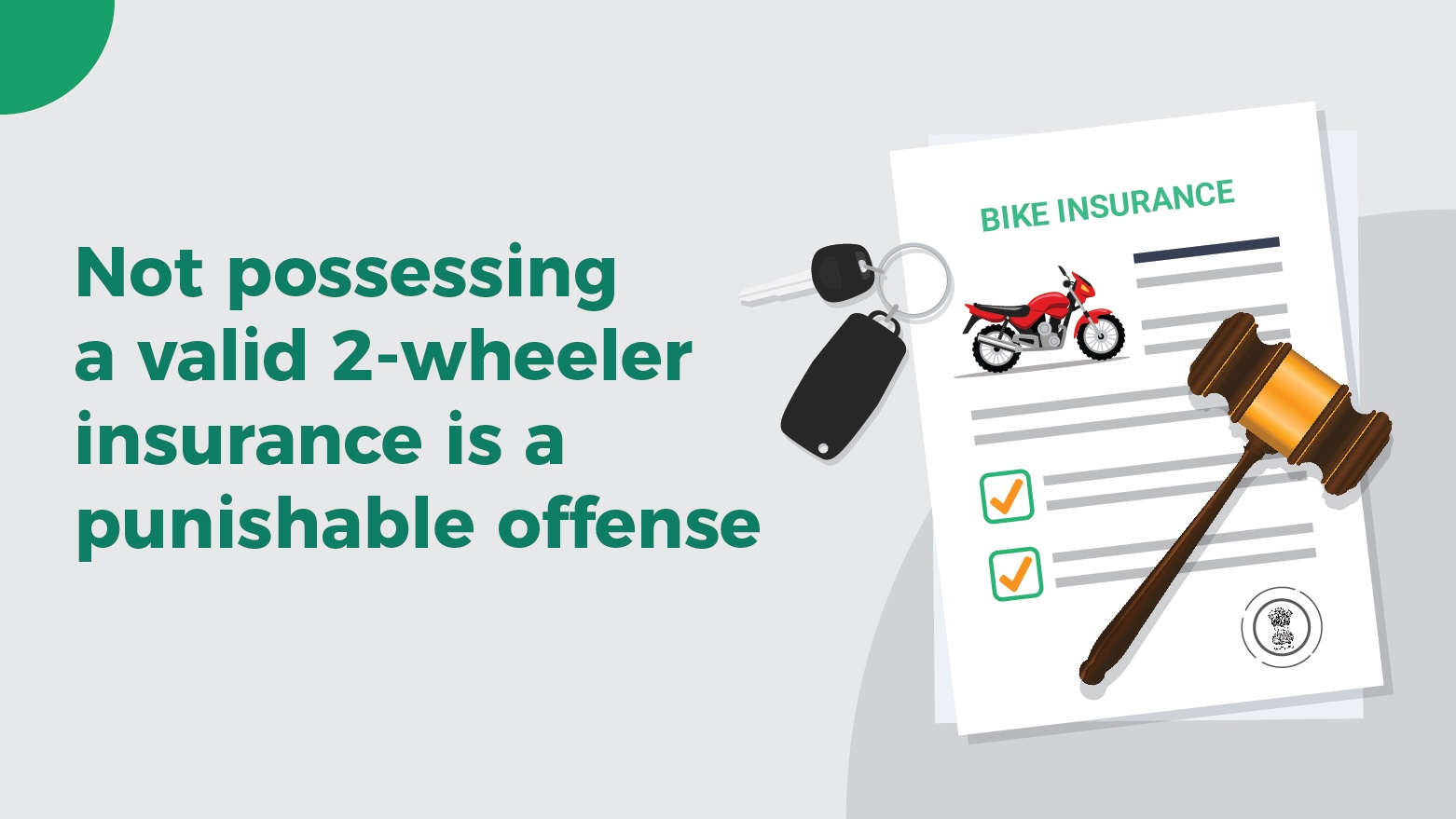
Two-wheelers are the most convenient modes of transport, especially in a country like India where traffic jams are the norm and the roads are not in the best shape. If you have not renewed your license on time and you are using your 2 wheeler, even for a short ride, then you are committing a punishable offense. Similarly, the implications of not renewing your 2 wheeler insurance plan are quite severe.

These insurance policies come with a grace period of 90 days, thereby enabling you to still renew the policy by retaining benefits such as a no-claim bonus. If you let the 90 days elapse, then you will have to avail a new policy, in such a scenario, the earlier accumulated benefits will not be brought forward.

In the event of availing of a new policy, you will have to submit the necessary documentation and the inspection of the vehicle becomes mandatory. There are a host of other hassles that you may have to undergo, in case you fail to reinstate your 2-wheeler insurance policy within the stipulated 90-day grace period after expiry.


Implications of not renewing your 2-wheeler policy on time:

  1. Illegal to ride an uninsured bike:
    There are multiple implications apart from the fact that it is illegal to ride a bike without 2 wheeler insurance in India. It is a punishable offense if you are caught by traffic police riding a bike that is not insured. The traffic policy can levy a penalty of up to Rs. 2000 or you could be liable for imprisonment up to 3 months. This is mandated in the Motor Vehicle Act, 1988.
  2. No cover during break-in period:
    Policy lapses when you fail to renew your policy by paying the premium after the expiry of your policy and also fail to reinstate it within the 90-day grace period. In such an event, you will have to void a new policy, and the period between the old policy expiration and the new policy coming into effect is termed as the break-in period. You will be unable to avail of any benefits during such period, further, your 2-wheeler will remain uninsured during such period. It is illegal to ride your bike during such a period in India.
  3. Loss of no-claim bonus:
    The no-claim bonus that you have accumulated over the years will lapse if you fail to reinstate your policy. No claim bonus is a reward that is extended to policyholders by insurance companies in the event of no claims done by the individual. This is typically a 50% discount on your bike insurance premium for not having made any claims during the policy year.
  4. Cumbersome and inconvenient:
    If you have not been able to reinstate the policy on time, then you will have to undergo the rigmarole of submitting new documents, taking the bike for inspection at the insurance office. On inspection, there is a possibility of an insurer refusing your insurance proposal, in which case you will have to submit a new proposal with a new insurer. This when compared to renewing your insurance with just a few clicks is cumbersome and time-consuming.

All this can be avoided by just renewing your policy on time! Renewing of policy can be done online and just requires a few clicks.


Renewing your 2-wheeler policy: It’s simple and easy!

The renewal of a two-wheeler insurance policy can be done online, thereby saving time and effort. The renewal can be done in 3 easy steps –

  1. Log in to https://turtlemint-stage.dreamhosters.com/two-wheeler-insurance/
  2. Put in your bike details here such as:
    • Make and model of the bike
    • Fuel type and variant
    • Choose the type of bike insurance policy you wish to opt for
    • Previous policy claim details such as:
      • Previous policy type
      • When is it expiring
      • Claims made in the previous year
      • No Claim Bonus %
      • Previous insurer details
  3. Choose your policy from the options shown. You can also compare the select the one which best suits your needs
  4. Then go ahead and fill in the necessary details and make an online payment
  5. The policy document would be emailed to your registered email id.


Porting your policy before renewing

While you must ensure that you renew your policy on time, to ensure that you do not have to face regulatory/legal implications. There may be a scenario where you may want to shift your bike insurer. In such a case, you should ideally set a reminder at least 45 days before starting to scout for a new policy. Check for the benefits, coverage, and premium before you choose the new insurer. It is also important to choose an insurer that offers good service, including reminders for renewal and hassle-free claim settlement.

Renewing your 2 wheeler policy on time is not only easy, but it is also the right thing to do! It is quite apparent that timely renewal of your two-wheeler policy will save cost, effort, and time.

Ways to Find Policy Number using Vehicle Number

A car insurance policy is mandatory under the Motor Vehicles Act, 1988. That is why if you are buying a car or have one, you are required to have a valid car insurance policy on the same. There are two types of car insurance policies generally offered by the insurance companies – third-party liability, which is mandatory under law, and comprehensive car insurance policy which covers third party liability and own damages.

The car insurance policy number is a unique number that is printed on the policy document. It is allotted by the insurance company to every policyholder. It helps the company identify the policy account. The policy number is a numerical digit that you get after the policy is issued. 

If you buy your car insurance policy online, the number can be found on the soft copy of the policy document sent to your email ID. For offline policies, however, you would find the number printed on the policy document when you get the hard copy of the same. 

What is a car registration number? 

Vehicle number means the registration number of your car. Your car registration number is a unique number allotted to the vehicle by the Regional Transport Office of your district. When you buy a car, you will have to register it with your local RTO within a period of 30 days of buying it. The respective RTO will give you a unique registration number which serves as an identification of your car and its owner, i.e. you.

The vehicle number, or the registration number of the car, consists of 10 digits in which the first two digits signify the state in which your car is registered, the next two digits are the district code and the last four digits are your car’s unique identification number. For example, if your car registration number is WB 28 ST 4509, WB stands for West Bengal, 28 refers to the district of the state in which the car has been registered and 4509 is the unique identification number of your car. 

When do you need your car insurance policy number? 

Your car insurance policy number is required in several instances. Therefore, you should keep the physical copy of your car insurance policy handy while driving a vehicle. Some of the instances when you need your car insurance policy number are as follows: 

  1. In case of making a claim

    The insurance company asks for your car insurance’s policy number when you are registering your claim. Additionally, when filing a police FIR in the case of a third party or theft claims, the police might also require your car insurance policy number to be mentioned on the FIR. Thus, when making claims, the policy number is needed.

  2. Renewing the insurance policy

    The car insurance policy number is essential at the time of renewing the policy. If you renew your existing policy, you would have to provide the car insurance policy number to retrieve your details. 

    You can also buy a new insurance policy on renewal and transfer the existing no claim bonus to the new policy. In such cases too, the policy number would be needed when filling up the form for the new plan.

  3. For checking car insurance details

    If you don’t have your car registration number handy and you need to check the details of your insurance policy, you can use your car insurance policy number to do the same. Similarly, you can also use your car registration number to check the policy details if you do not have a car insurance policy number handy. 

  4. For the purpose of verification

    The car insurance policy number is required when the traffic police stop your vehicle to check the validity of your insurance policy. In such a case, even if you do not have a physical copy of your policy document, you can provide your car insurance policy number which would allow the law authorities to check the validity of your insurance online.

  5. To apply for duplicate documents

    Though it is much easier to check or retrieve your car insurance policy online, you may require physical copies of the document for various purposes. Hence, if you have lost your car insurance policy document, you can apply for a duplicate one. You would require the policy number in order to apply for a duplicate car insurance policy. 

    Your car insurance policy number is, therefore, important and should be kept handy at all times.

Different ways to find your car insurance policy number using car number

If you have lost your policy document or have forgotten your car insurance policy number and need to access it, your vehicle number would come in handy. You can find your car insurance policy number through your vehicle or registration number. 

When you buy your car insurance policy, it gets linked with your car registration number making it easier to check the details of the policy with the help of the registration number. Below are some of the ways how to find insurance policy number by vehicle number:

Online 

There are different ways to check your car insurance policy number online. If you want to know how to find car insurance policy number online, here are your options: 

  1. You can visit the official website of the Regional Transport Office in which your car is registered and fill in your registration number to check your car insurance policy number
  2. The Insurance Regulatory and Development Authority of India has developed a website known as the Insurance Information Bureau (https://iib.gov.in/). You can access the website for checking car insurance policy number online using your registration number
  3. You can visit the State Transport Department website and find the details of your car insurance policy using your registration number
  4. The website of the Ministry of Road Transport and Highways (https://parivahan.gov.in/parivahan/) also contains the details of the car insurance policy issued on your registration number. You can, thus, access the details of the insurance policy on the website by entering your registration number. 
  5. You can also visit the official website of the insurance company and use your registration number to log into your account to check your car insurance policy number. By logging into your account, you can also check various other details of your car insurance policy. 

Alternatively, if you do not remember your car registration number, some insurance companies provide a mobile application facility in which you can log in to your account through a mobile number. After you log in on the mobile app, all the details of your car insurance policy will be reflected including the policy number. You can, thus, access your car insurance policy number through the mobile application anytime anywhere. 

Offline

You can take the help of the insurance aggregator or the broker from whom you brought the insurance policy. Alternatively, you can also call the insurance company or visit the nearest branch of the insurance company and provide your car registration number along with certain personal details as may be required. The insurance aggregator or the executive of the branch will help you find your car insurance policy number. 

A car insurance policy number is the identification number of your car insurance. It should, therefore, be stored carefully. If you forget or misplace your car insurance policy number, you don’t have to worry. If you are looking for an answer to how to find my car insurance policy number online, the answer is your car registration number. Use the number and opt for any of the methods stated above to find your car insurance policy number.

Frequently Asked Questions

  1. Does my car insurance policy number stay the same on renewal?

    If you renew the policy with the same insurance company, your car insurance policy number would stay the same. However, if you switch insurers, the policy number would change. You should, thus, keep the latest policy number handy at all times.

  2. Is the proposal number similar to the policy number?

    No, the proposal number is different from the policy number. The proposal number is the number that is applicable when you apply for a car insurance policy. Once the policy is issued, another formal number is issued which is called the policy number.

  3. Would I have to pay a fee for requesting a duplicate copy of the insurance policy?

    The requirement of the fee depends on your insurance company. Many companies charge an administrative fee for issuing a duplicate policy copy. Others don’t. So, check with your insurer if you need to pay a fee for a duplicate copy and pay the fee, if applicable, to get the copy at the earliest.

  4. What is an Insurance Certificate?

    The Insurance Certificate is a one-page document that contains the details of your car insurance policy, including the policy number. It is recommended to carry the certificate in the car so that you can produce it when required. 

  5. Does my RC book contain the car insurance policy number?

    No, the RC book does not contain the details of your insurance policy. As such, the car insurance policy number is not recorded in the RC Book.