Has GST made your car purchase cheaper?

Planning to buy a new car but not sure how the prices got affected once GST rolled in?

This Turtlemint article has you covered! Read on to know more about GST and its implications on the cost of passenger cars.

What is GST?

GST is an indirect tax levied on goods and services throughout India, from July 1st, 2017 onwards. Most taxable businesses and persons have to register for GST and make GST payments to the government electronically, online. The streamlined process of GST payments and refunds is intended to bring in more transparency and accountability.

The GST bill has been passed to simplify the Indian tax sector. Instead of the multiple-tier excise duty structure used earlier for passenger cars, the new tax structure under GST (Goods & Services Tax) levies a peak duty of 28% along with cess, which varies according to the type of car.

car insurance


GST & the Indian car industry

Overall, the GST move has proven positive for both automobile manufacturers and customers. The tax on passenger cars has been reduced to a maximum of 43 percent since GST rolled in. Moreover, the supply chain mechanism has improved under the GST registration framework. Since GST registration is mandatory for most business entities including  large auto parts suppliers, manufacturers will now be able to procure auto parts at a cheaper cost.

Automobile manufacturers like Skoda, Nissan, Tata Motors, Renault, Mahindra & Mahindra, Honda, Ford, Maruti Suzuki, Toyota, BMW, Mercedes-Benz, and Audi have already started passing on the GST benefits to consumers by reducing the price of their car models.

Almost all passenger cars have lower price tags since July 1st. Even the demand for luxury cars, which had begun dwindling last year, has now started to rise thanks to the rationalization of taxes.

The only negative impact of GST seems to have been on the prices of the fuel-efficient hybrid cars. For instance, the prices of hybrid variants Toyota Camry and Toyota Prius have been hiked by over Rs. 3.5 lakh in Bengaluru and up to Rs. 5.24 lakh in Delhi.

Some cars that you can now purchase cheaper are mentioned in the table below:

car insurance

car insurance

car insurance

Now that you know which car GST has made less costly, you can make an informed purchase decision. Do check out the 8 ways to keep your car cool in summer and the 5 destinations from Mumbai you can drive to, dear future car-owner!

Did you know, car insurance companies are likely to revise premiums because of GST? Car insurance companies might pass on the price hike to you, the end-consumer, by increasing the premiums they charge!

Need some help finding a cheap car insurance policy? Turtlemint allows you to compare different car insurance policies offered by car insurance companies. Call our Car Expert at 1800-266-0101 or head on over to turtlemint.com to get car insurance quotes for an easy car insurance comparison.

Read more Car insurance terminologies you should know

Read more Types of car insurance covers and their benefits

How do I choose the best plan for my parents?

William Penn quoted, ‘Next to God, thy parents’. He couldn’t be more right. Our parents bring us into the world, nurture us, shape our future and make us independent all the while sacrificing their needs. Isn’t it, therefore, important that when we become financially independent, we take care of our parents?

Thankfully, most of us take care of our parents in their old age. However, one cannot deny the huge medical costs associated with such care. In older ages, our parents are more susceptible to ailments and such ailments pose a threat to our finances. Even if our parents are living independently, it is imperative to safeguard their limited finances from the high medical costs. To save our finances and our parents’, a health insurance policy is needed. There are many health plans available in the market today. Do you know how to choose the best plan for your parents?

Choosing the best health plan for your parents is simple if you follow some common tips mentioned below:

  • The plan should allow a high level of Sum Insured

When it comes to buying a policy for your senior citizen parents, you might find limitations on the amount of Sum Insured available. Such limitations limit the coverage provided by the health plan. Given the increasing cost of medicine, a health plan with an optimal Sum Insured is required. So, the plan which offers the maximum coverage amount would be the best plan for your parents.  

  • Choose a plan with a low waiting period for pre-existing ailments

Since your parents are old, pre-existing illnesses are likely. Every health insurance plan excludes coverage for pre-existing illnesses for some years when the policy is bought. This is called the waiting period. Usually, the waiting period ranges from 1 year to 4 years. The best health insurance plan for your parents would be one which has the lowest waiting period. This would ensure that your parents get a comprehensive coverage at the earliest.

  • There should be lifelong renewability

Although IRDA (Insurance Regulatory and Development Authority) has allowed lifelong renewability, some health insurance plans do not allow lifelong renewals. If there is a limit on the maximum age, your parents wouldn’t be able to enjoy coverage in older ages when a health plan is a must. Therefore, look at the maximum renewal age of a health plan and ensure that the plan allows lifelong renewability.

  • The co-pay ratio should  be lowest

Every health insurance company adds the co-pay feature to a health plan if the plan is being bought by senior citizens. Co-pay represents the proportion of claim which is payable by you. For instance, if a health insurance plan has a co-pay ratio of 20% and there is a claim of Rs.10, 000, Rs.2000 would be borne by you while the insurance company would settle the remaining Rs.8000. If the policy has a high co-pay ratio your out-of-pocket expenses on each claim would be high. Thus, look for plans which have the lowest co-pay requirement as such plans are the best.

  • The claim settlement process of the plan should be easy and cashless

Health insurance companies settle the claim either by cashless facility or through reimbursement. In the former, the company directly settles your medical bills while in the latter you have to bear the costs yourself and the company reimburses you later. Moreover, companies either settle the claim through a Third Party Administrator (TPA) or they have an in-house claim settlement department. A cashless claim settlement facility through the in-house department of the insurance company is the best way to get your claim settled. So, the best health plan should give you this preferred mode of claim settlement.

Health insurance companies have launched specially designed senior citizen health plans. So, if you are looking to buy a policy for your parents, a senior citizen health plan would be your best bet. These plans are designed to cater to requirements of senior citizens. To choose the best senior citizen plan, you should look at the above-mentioned parameters. To find the best plan, go online and compare between the available plans before you make your choice. The online medium would show you all available plans and help you to make the best choice. So, make your parents proud. Buy the best health insurance policy for them and spare them and yourself the financial burden of high healthcare costs.

Read more about Get your parents insurance now – Find the right senior citizen plan

Read more about Separate health insurance plans for parents or floater?

Feel free to share your comments below

All you need to know about renewing your lapsed two-wheeler insurance policy

Bike insurance policies are undergoing a change. Nowadays, these policies are also being offered for a longer tenure of 2 years or 3 years besides the regular one year policy.

Whether you buy a 1-year policy or a policy with a longer tenure, your bike insurance policy would come up for renewal after the stipulated term comes to an end. Do you know how to renew it?

Renewing a bike insurance policy is an easy affair which seems difficult to common individuals who don’t know how to go about it. As a result most bike insurance policies lapse. Are you too a victim of a lapsed bike insurance plan? If you are, its time you wake up and renew your bike insurance policy without further delay. If you don’t know how the article would give you a complete guide to renewing your lapsed policy, but first, let us understand what exactly is a lapsed policy.

What is a lapsed policy?

Your bike insurance policy has a specified tenure. When the tenure is over and you do not renew the plan, the cover stops and the policy lapses. For instance, if you have bought a one-year bike insurance policy on January 1, 2017, the policy would run till the midnight of 31st December, 2017. On 1st January, 2018, if the policy is not renewed, the cover would stop and the policy would lapse.

A guide to renewing a lapsed policy

What happens when you are lazy or forgetful and do not renew your bike insurance plan on time? Your bike insurance policy lapses. To renew your lapsed policy here is what you should do:

  • Do online renewals

The online marketplace has revolutionized the way we shop, hasn’t it? You can do everything online and renewing a bike insurance policy is no exception. Bike insurance companies allow online renewals of your lapsed bike insurance policy. There are online insurance aggregators, website of insurance companies and also online insurance brokers from where you can renew your bike insurance policy online. Just provide your bike details, follow some simple steps, arrange for an inspection, make an online payment and, voila, your policy would be renewed.

Read more about why buying online insurance is better than offline

  • Get your bike surveyed and inspected

If your bike insurance policy lapses there is an inspection of your bike before your policy is renewed. Even if you opt for online renewals, an inspection is required. To get your bike inspected you would simply have to inform the insurance company which sends its surveyor who conducts the inspection. After the bike is inspected the surveyor submits his report to the company and the company allows your policy to be renewed.

  • Protect your No Claim Bonus (NCB)

No Claim Bonus (NCB) is allowed to you if you do not make any claim in a policy year. This bonus rate starts from 20% for the first claim-free year and increases every year when a claim is not made. NCB allows you a premium discount when you renew your bike insurance policy. If your policy lapses, you stand to lose your accumulated NCB discount if you do not renew your policy within 90 days of such lapse. So, if your policy has lapsed, remember to renew it timely to retain your NCB.

Read more about No claim bonus

  • Pay heed to automated renewal reminders

It’s not only you who loses when your bike insurance policy lapses, it is the insurance company too. That is why your insurer sends you regular reminders through calls, texts and emails when your bike insurance policy is approaching the renewal date. You should heed such reminders and renew your bike insurance policy on time. Well, you must be wondering how this point fits into renewing your policy. It doesn’t. This point is a heads up for preventing your bike insurance policy from lapsing the next year.

The three above-mentioned points help you in renewing your bike insurance policy if it has lapsed and the last point tells you to prevent such a lapse from happening again. So, get your online bike insurance policy renewed timely. Not only would you escape from any traffic fine for not having a valid insurance cover, you can also retain your NCB if the renewal is done on time.

Read more Everything you need to know about two wheeler insurance policies in India

Feel free to share your comments below

6 tips to reduce health insurance premiums

Doesn’t the prospect of discounts and bargains sound like music to your ears? It must. After all, who doesn’t like saving money? That is why we keep an eye out for offers and discounts, wait for the sale season and buy only after comparing between the available choices. When it comes to health insurance plans too, we look for ways to reduce the premium without compromising on the coverage. Is it possible to do so?

Actually it is. Since a health insurance plan takes care of your medical bills, having an optimal coverage amount is essential. Juxtaposed to the optimal coverage, the premiums should also be affordable. You can’t burn your pockets on a health insurance plan, can you? You can’t and that is why, here are 6 tips to reduce your health insurance premium:

Tip # 1 – choose a coverage based on your family’s health requirement

When you are choosing a health insurance plan it is imperative to consider the coverage requirements you and your family needs. Then you should look for such coverage features in potential health plans. Since the premium charged by a health insurance plan depends on the coverage it extends you should choose only the coverage features you need so that you do not pay additional premium for unnecessary coverage features. A very common example is the maternity coverage feature available in some health plans. If you already have kids and are not planning to have any more, a health plan with maternity coverage is unnecessary for you. So, assess your coverage needs and then opt for a health plan.

Tips # 2 – lead a healthy lifestyle

Your lifestyle determines your health. If you lead a healthy life you are less prone to ailments and diseases. This fact is recognized by many health insurance companies which offer special premium discounts if you maintain a healthy lifestyle. So, take out your running shoes, hit the gym, choose a balanced diet and enjoy premium discounts in your health insurance plan. Doesn’t this premium reducing way provide dual benefits? You can save your money and also become fitter and healthier. A win-win situation, don’t you think?

Tip # 3 – buy young

What, do you think, is the right age to buy a health insurance policy? Is it the 30s or the 40s? The fact is the younger you buy the better. Buying young has dual advantages. One, you can get a comprehensive coverage without restrictions. Two, you save on the premium costs. So, if you want to reduce your health insurance premiums, buy a policy when you are young.

Read more about Health insurance not an option any more but a necessity

Tip # 4 – utilize the 80D tax benefit optimally

The premiums which you pay for your health insurance plan are tax-free under Section 80D up to Rs.25, 000 (Rs.30, 000 if you are senior citizen). So, if you are in the 20% tax-bracket and your health insurance premium is Rs.20, 000, your effective premium would become Rs.20, 000 less the tax you save which is (20% of Rs.20, 000) amounting to Rs.16, 000. Moreover, if you pay the premiums for a policy of your parents, you can save an additional Rs.25, 000 (Rs.30, 000 if they are senior citizen) from your taxable income. So, utilize the provisions of Section 80D and save on your health insurance premiums.

Tip # 5 – look for discounts

Health insurance plans offer different types of premium discounts. For instance, if you buy the policy online you can get a discount. If you add 2 or more family members in the plan you can earn a discount. If you buy a 2 or 3 year policy, you can get a discount. So look for these premium discounts which lower your health insurance premiums.

Tip # 6 – compare before you buy

Do you know how many health insurance plans are available in the market? Too many to count! Every health insurance plan has different coverage options and is priced differently. That is why, comparison is very essential. Go online, look for available health insurance plans pertaining to your coverage requirements, compare the premium quotes and then buy the plan. When you compare you can get a plan which offers the best rate of premium and save money on the premium costs.

Simple tips which, when followed, help you to reduce your health insurance premium. There is no sale season in the health insurance market but these tips are sure-shot ways of reducing the premiums. So, remember these tips and save your hard-earned money.

Read also What is insurance and how does it works?

Read also An anatomy of an health insurance plan

Read about Dejargonizing health insurance terms

Also, check out our video below to know the 6 tips to reduce health insurance premium

Feel free to share your comments below

Should I buy term insurance riders?

For a long time now, term insurance plans, policies that offer death benefits to the nominee, have been the traditional instrument we buy to financially protect our families from the risks of an uncertain future. In recent times, considering the increase in the average life span as well as the growing number of physical and financial risks, most insurance companies are offering various add-ons or riders that supplement the coverage offered by term insurance plans.

Read Why Term Insurance Plans are an Absolute Buy

Accidental Death Benefit

An accidental death is difficult for those left behind; and the difficulties multiply if there are financial obligations to be met post the loved one’s death. A basic term plan gives out the sum assured by the policy; however an accidental death benefit rider makes an extra sum available to your family. Since this rider is only for accidental death, you should opt for it if you are in a profession that is more prone to hazards. Otherwise, a normal term plan would suffice, as it pays a sum assured even if death is not due to accidents.

Partial/Full Disability

Any incident leading to disability, be it partial or complete, not only affects you physically and emotionally, but also can drain your financial resources, specially if it leads to a loss of income. A disability rider offers financial support in such cases. However, it’s important to note that the rider offers limited coverage. A standalone Disability Insurance Cover is much more comprehensive, though it costs more.

Premium Waiver

Whereas normally a term plan has to be surrendered if you can not pay the premium, the premium waiver rider allows the policy to continue. If there is a chance that you may not be able to pay the insurance premiums in the future due to loss of income or a disability, a premium waiver rider is necessary. If you have a guaranteed steady income and do not envisage a loss of income, this rider is not needed for you.

Battle Critical Illnesses

A critical illness can be a major strain on your finances, considering that medical expenses are exorbitant for all such diseases. A critical illness rider in such circumstances mitigates the financial burden with a lump sum payment if you are diagnosed with one of the illnesses listed on the policy document. The catch here is, the sum assured for critical illness is linked to the term plan’s sum assured, and there are just a handful of illnesses covered in the rider. A separate critical illness policy, on the other hand, covers a  whole range of critical illnesses and also offers more flexibility in terms of the sum assured. Hence, it makes more sense to buy a standalone critical illness policy.

Income Benefit

A term plan will provide death benefits to the nominee in the form of a lump sum pay-out. If you have dependents who will need a regular income to meet their day-to-day living and do not have any other source of income, then an income benefit rider will help your nominee get a supplementary income in addition to the sum assured. Buying this rider might result in a slightly higher premium, but the benefits far outweigh this extra cost.

The Impact on Premiums

Just as you pay a premium for the term insurance, you need to pay an add-on amount for each rider you buy. The more riders you take, the higher the total premium. Hence, you need to think about the riders you might need in the future and weigh the advantages against the premium to be paid for them, before making a final decision of buying a term insurance plan.

Read more about What is insurance and how does it work?

Read more about Common terms in life insurance policies

Read more about Life insurance policy in India – How does it works?

5 safety features in your car you didn’t know about

The Ministry of Road Transport and Highways released a report in June 2016 for road accidents in India. According to the statistics, Tamil Nadu reported the highest number of accidents at 69, 059 cases. Mumbai was the top city in registering accidents at 23, 468. Well, the numbers are not surprising. Whether it is the fast lifestyle or the thrill of speed, road accidents have grown in recent years. Whenever you open the newspaper you would find an accident case staring back at you. Sad, yet true!

While road accidents are increasing, are you, as an aware individual doing your bit to reduce them?

People world over adopt various techniques to reduce the probability of accidents. A very popular concept in Netherlands is Dutch Reach which is practiced by everyone. The Dutch Reach is nothing complicated but a safety habit adopted by the people of Netherlands. According to this habit, the driver reaches out to open the car using the hand which is farther from the door. For instance, if you are sitting on the left seat of your car you should use your right hand to open the door to get out of the car. When you do that, you have to turn around the door for opening it. When you turn around, you can see any passing vehicle and prevent your car door from ramming into any incoming vehicle. This practice thus helps you in avoiding accidents.

Car manufacturers also promote safe driving habits and provide some inbuilt safety features in their cars. Here are 5 such safety features found in many cars.

  1. Detachable headrests

Did you know that car manufacturers keep the car’s headrest detachable on purpose? Yes, the headrests are detachable and the spikes at the end are sharp. Moreover, the window glasses are weaker on the inside than on the outside. So, in case of any emergency, you can detach the headrests and use the sharp spikes to break open your window. You can thus, get out of your car in emergencies and easily save yourself.

Also, remember to keep these 10 items to Build your Car Emergency Kit

  1. Airbags for passengers

While you knew that cars give airbags for the driver and the co-passenger did you know that airbags were also offered for passengers seated at the back? Car manufacturers are building airbags for the backseats as well and are selling their cars on this USP. Moreover, if you want, you can also opt for airbags in the doors as well to protect your torso in case of a collision. Cool, isn’t it?

  1. Hassle-free gear change

Automatic cars are replacing the traditional clutch and gear cars where you are required to frequently change gears. Newer models are increasingly being offered as automatic cars thus reducing the hassles of shifting gears. In automatic cars there are only three gear settings – forward, neutral and reverse. You are free from changing gears depending on acceleration or deceleration. In fact, many cars are also offering dials for gears. Beat that!

  1. Child lock

While you may have heard about central locking system where the switches at the driver’s side locks all doors and windows, have you heard about child lock? Child locking is a facility wherein the doors and windows are locked and cannot be opened from the inside. You can open the doors only from the outside. This feature is very helpful if you have children travelling with you. As the doors and windows are locked, a child cannot accidently open the doors when travelling and can avoid becoming a victim to accidents.

  1. Parking assist

This feature is commonly present in most cars nowadays. This feature helps you park. There is a rear camera and a collision warning. Moreover, the park assist feature also tells you the safe distance from the curb or the next object which can hit your car’s rear end. Thus, the feature helps you in parking your vehicle safely and correctly.

Were you aware of these features? Car manufacturers are doing their bit to make their cars safer, what about you?

In fact, a feature which is present in international cars, but lacking in their Indian counterparts is Electronic Stability Control. This feature helps your car to stay in control on the road and not swerve uncontrollably. Though Indian cars don’t have this feature currently, they might in the future. Meanwhile you can adopt some safety etiquettes when driving your car and install the above-mentioned safety features. Alternatively, you can also go with a good car insurance policy. After all, prevention is better than cure, isn’t it?

Read more about All you need to know about car insurance

Read more about Benefits of purchasing your car insurance online

Read more about Anatomy of car insurance

Feel free to share your comments below

5 tricks to get the best quote for bike insurance

A bike insurance policy is a mandatory requirement and if you have a bike which you love, you must know this fact. The Motor Vehicles Act, 1988, directs that every two-wheeler (or any other vehicle for that matter) should have a valid third party insurance policy. This policy protects you against any legal liability which arises when you cause harm to any third party or property. However, the policy does not cover losses suffered by you or your bike. That is why, a comprehensive bike insurance policy, which also covers your losses, is preferred.

Comprehensive bike insurance policies are dearer than third party covers because they have a wider scope of coverage. So, should you avoid comprehensive insurance plans? Absolutely not! You could, alternatively, avail the best quote for your comprehensive bike insurance policies. Do you know how? No? Don’t worry. The following 5 tips tell you how:

#1 Use your accumulated No Claim Bonus (NCB)

Your bike insurance policy offers you a reward if you do not make a claim in any policy year. You get a No Claim Bonus (NCB) which discounts your renewal premium when your policy is renewed next year. This NCB discount is progressive in nature and for every consecutive claim-free year the discount increases. This NCB discount starts from 20% and goes as high as 50% if you don’t make claim for 5 consecutive years. Who doesn’t love a flat 50% discount? To get the best quote, use your NCB when you renew your bike insurance policy and enjoy premium discounts.

Read more about tips on how to earn No Claim Bonus

#2 Be wise when choosing add-on covers

Your bike insurance policy also offers you additional riders which can be added to your comprehensive plan to enhance the scope of coverage. Though these riders enhance the coverage, they also require additional premiums. So, if you are looking to opt for add-ons, be wise. Choose only those riders which are necessary. Some popular add-ons include roadside assistance, zero depreciation benefit, return to invoice, etc.

Read more about two wheeler insurance plan’s add-ons

#3 Renew your bike insurance policy on time

Bike insurance policies are offered for 1-3 years after which they need renewals. If you delay renewing your bike insurance policy on time, you stand to pay a higher premium. You would be out of time due to which you wouldn’t be able to compare various policies and select the best quote. Moreover, if your bike insurance policy has lapsed, the resultant premium on renewal would be higher. So, be zealous with your bike insurance renewals. Renew the policy on time to get the best quote.

Read more about Why long term two wheeler insurance is such a great idea

#4 Maintain a good driving record

When you drive safe you face lesser accidents and have a good driving record. Lesser accidents also lead to lesser claims. If you do not have many claims in your bike insurance policy, your NCB would be the highest. Moreover, the insurance company would also understand that you present a lower risk. Both these factors would reduce your bike insurance premium so that you can get the best quote.

#5 Compare before you buy

Are you aware of the number of bike insurance policies available in the market today? There are more than a dozen and each policy promises the best coverage features. To get the best policy with the best premium quotes, you should always compare the available policies before you zero in on one. To compare easily you should use the online medium. There are many web aggregators and online brokers which promise the ease of comparison across different policies. Online brokers are better as they provide you with specialized technical assistance both at the time of buying the policy and also at the time of claim. So, visit an online broker, compare between different bike insurance plans and buy one which has the best features along with the best premium quote.

Don’t compromise on the coverage for the sake of lowering your premiums. Buy a comprehensive bike insurance policy and enjoy wider coverage for your bike and yourself too. If you are worried about the higher premiums, relax. The above-mentioned tricks help in lowering the premium and promise you the best deal on your bike insurance policy. So, arm yourself with these simple tricks and find yourself the best bike insurance quote from Trutlemint.

Are you buying two wheeler for the first time? Know about two wheeler policy insurance policy

Feel free to share your comments below


3 ways you can be fooled while buying life insurance

Anil was thinking of investing in a life insurance policy but didn’t know where to buy it from. His neighbor was a life insurance agent while he was getting frequent calls from a broker’s company for a policy too. His friend advised him to try the online medium for cheaper premium rates. While his neighbor promised him good advice, the broker offered him expert knowledge and the online platform offered him cheaper rates. He was confused. Do you, too, find yourself in this confusion?

You can also read Reasons to buy a Life Insurance Policy Now

Life insurance is a technical concept. When buying a policy, you might be fooled if you do not have the required knowledge. Whether it is agents, brokers or the online marketplace, buying insurance is fraught with traps. If not tread carefully, you might fall into one. Let us see how you can be fooled when buying a life insurance policy from different sources or channels:

Agents

Agents represent only one insurance company. If your agent is known to you, the problem of policy renewal is solved as the agent would remind you of your renewals. Thus, you can avail the continuity benefits of your insurance policy when you buy from an agent. However, even your agent can fool you on the following aspects of your life insurance policy.

  • Agents don’t tell you the drawbacks of the plan

Agents want to sell you insurance. As such, they skip out the possible drawbacks of the plan. Though the benefits are highlighted, the shortcomings are kept in the dark so that you buy the policy.

  • Suitability of the plan

Agents are more concerned in selling you a life insurance policy which promises them the highest commission income. As such, they often overlook the fact that a life insurance policy should be first matched with your requirement to assess its suitability. For instance, if you were an unmarried individual, you wouldn’t be requiring a child insurance plan as yet.

  • Plan exclusions

While many agents help you in understanding the plan benefits, what they never mention is the plan’s exclusion list. For instance, no life insurance policy pays the Sum Assured in case of suicide committed within the first year of buying or reviving the policy. Ensure you clarify such clauses with your agent before you buy a policy.

  • The importance of filling up the form yourself

Your life insurance proposal should be filled in by you after understanding the details asked. If you fill the form yourself, you would provide correct personal, medical and financial information asked in the form. If your agent does not tell you the importance of filling this form yourself, you might take for granted; the correctness of the information provided and hence may be fooled in case there is an error. Hence, although you may take help, it is advisable to fill your proposal form yourself so that your family does not face any difficulty later during claim.

Brokers

Banks, Non-Banking Financial Corporations (NBFCs) and other privately owned companies might act as life insurance brokers selling you insurance plans of different companies. While they have expert knowledge, here’s where you can be fooled when buying a plan from brokers:

  • Advantages and disadvantages of the policy

While these brokers and NBFCs might tout the different benefits promised by the policy, they skip out on the disadvantages. Even in case of advantages, you might not get a clear picture. You might not understand how the advantages are relevant with your investment planning requirement and fall for a wrong insurance plan.

  • Tenure

Life insurance plans usually come with a long-term perspective. Brokers, when selling the insurance plan, may highlight the returns, which you can yield over a shorter tenure. You might, thus, be mis-informed on the correct tenure of your plan.

  • Continuity benefits

When buying from brokers, you usually get service only when buying the policy. In subsequent years, the brokers might not have a long-standing relationship with you and as a result your insurance policy might lapse. In case of lapse, you lose out on the major benefits. Though your policy might continue (if at least 2/3 years’ premiums have been paid) or can be revived, you might suffer financial loss with respect to the value received.

Online

The online medium of buying insurance policies is also gaining momentum. You can buy the policy directly online and also save on your premiums. Though buying the policy online is easy, watch out for these pointers:

  • Availability of too much information might let you skip it altogether

When you buy online, you get all the information of the policy online. As life insurance is a technical product understanding all the available information for you, a layman, might be difficult. Hence, you might skip to understand the same and fall for any policy that the assisting agent recommends.  Why be ignorant when you have all the information at hand? Be insurance smart and buy the best-suited policy for you!

  • Drawbacks and exclusions of the plan may not be listed

Like agents and brokers, the online platforms too may not list the plan’s drawbacks or exclusions. Thus, if do not compare the plans or understand a plan well, you might end up buying a plan, which has more drawbacks than benefits.

  • The trap of publicity of insurance plans

Though all insurance plans are beneficial, they might not be suitable for your requirement. You might find a plan highly publicized on the online platform. Lured by the publicity, you might fall prey to such plans without considering their usefulness and applicability.

Conclusion

As mentioned, there are many pitfalls when buying a life insurance policy, whether you do it online, through an agent or through brokers. All you can do to avoid being fooled is to remain alert and act smart. Know everything about the policy before you commit your money to it and avoid being trapped in a plan. You can visit the term life page on our website and buy a plan that you find most suitable for you.

Read more about What is insurance and how does it work?

Read more about Common terms in life insurance policies

Read more about Life insurance policy in India – How does it works?

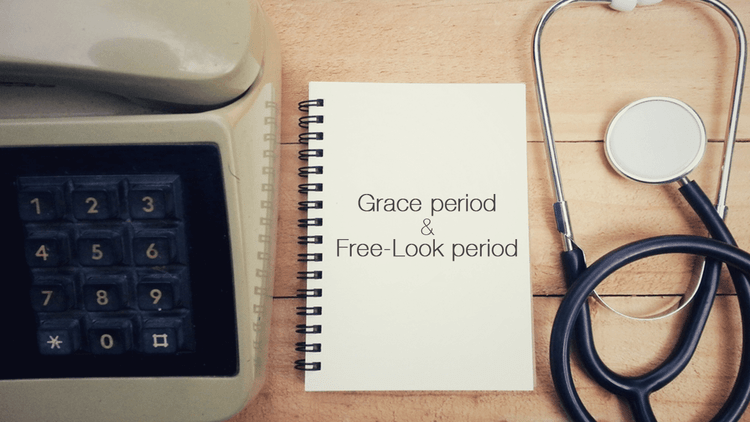
Demystifying grace period and free-look period in health insurance

Ram and Shyam were two best friends, both had a problem with their respective health plans. Ram felt that his agent had cheated him into buying a health plan which had a higher premium (his research showed him plans with the similar benefits having lower premium rates). Shyam, on the other hand, had missed renewing his health plan on time (he was on a business trip). Both felt that they would suffer the consequences. Ram – by paying a higher premium. Shyam – by having his policy lapsed. Dejected and sad, they were looking for a possible solution when they stumbled across the concepts of Grace Period and Free-look Period. It was like manna from heaven!

Did you know that you can pay your premiums even after the due date has passed? That too without any additional charges or the fear of your policy lapsing! What if someone tells you that you can cancel your policy after buying it if you are not satisfied?

Your health insurance policy has various provisions to safeguard your, the policyholder’s, interests. Various clauses and terms are inherent in the insurance plan for the same. Two such concepts are:

  1. Grace Period
  2. Free-look Period

Do they sound the same? They are not. A grace period is completely different from a free-look period. Let us understand these concepts in details:

What is a Grace Period?

In every health insurance policy, there is a due date for paying the insurance premium. However, you might not be able to pay your premiums by the due date. Either because you forget or because you are in a financial crunch, you might miss paying the premium by the due date. In these situations, the policy allows a grace period for paying the premiums due. The grace period is essentially an extra tenure allowed by the company to enable you to pay the outstanding premiums. During the grace period the policy does not lapse. However, if you fall sick and raise a claim during the grace period, it would not be paid.

What is the tenure of the grace period?

The tenure of the grace period varies between different plans. Usually, it ranges from 15 days to 30 days.

What are the benefits of Grace Period?

A grace period has benefits which are as follows:

  • The policy does not lapse during the grace period and you can retain the plan benefits.
  • It helps in a cash crunch when you don’t have sufficient funds to pay the premium.

What is Free-look period?

A free-look period, also called a cooling-off period, is the time allowed within which you can opt out from the plan if you are not satisfied. The free-look period starts from the date of policy issuance and continues for 15 days. Within these 15 days, if you have second thoughts or feel dissatisfied with the policy, you can cancel the plan and avail the refund of your premium.

Click here to know why you should invest in a health plan.

What is the tenure of free-look period?

A period of 15 days is allowed as free-look period to cancel the plan. In case of distant marketing channels and in some plans, this period is increased to 30 days.

What happens when the policy is cancelled in the free-look period?

If you cancel the policy in the free-look period, the premium which you paid for buying the plan is refunded. However, the entire premium is not refunded as it is adjusted for the applicable charges incurred on issuing the policy. Such charges include stamp duty, cost of medical examinations conducted (if any) and the proportionate cost of risk cover allowed after issuance and before cancellation.

What is the difference between grace period and free-look period?

Both these concepts are technically different. Let’s see how:

health


So, now you know what grace period and free-look period are. Don’t confuse between the two. Know them and enjoy these benefits allowed by your health insurance plan.

Click here for common health insurance terms

Read more about How to choose an health insurance plan

Read also An anatomy of an health insurance plan

Feel free to leave your thoughts or comments below